Wednesday, 16 March 2022

 Interesting. On my doorstep. To be built on a landfill site "somewhere in Surrey" apparently. This is reposted from Edie:


University of Surrey and SSE to create new onsite solar facility

The University of Surrey has chosen SSE Energy Solutions to oversee the development of a new solar facility that will boost energy procured from green sources to 20%, assisting toward the University's net-zero target.

The onsite facility will build toward the University’s target to reach net-zero emissions by 2030, which was announced in January 2020

The onsite facility will build toward the University’s target to reach net-zero emissions by 2030, which was announced in January 2020

SSE will design, build, operate, and maintain the new solar facility for the University. While details as to the size of the project are yet to be unveiled, the University believes it will boost onsite renewable generation from 0.1% currently to 20% of total annual demand.

The partnership will also see both parties work on solutions for decarbonising heat and a research initiative to create new PhD studentship opportunities for onsite demonstration projects.

The University has made an application to the UK Government’s Public Sector Decarbonisation Scheme for funding to support the plan.

The onsite facility will build toward the University’s target to reach net-zero emissions by 2030, which was announced in January 2020.

The University of Surrey’s president and vice-chancellor Professor Max Lu said: “This partnership is a landmark moment for the University of Surrey as it underpins our ambition to achieve our net-zero carbon target by 2030 and affirms our commitment to being one of the most sustainable universities in the sector.

“This exciting partnership with SSE Energy Solutions, together with our other initiatives in sustainability, enables us to make ever greater contributions to our already strong performance against the UN’s Sustainable Development Goals.  This performance contributes to our proud 61st position in the Times Higher Education’s global Impact Ranking 2021.”

Higher targets

Analysis of the sustainability at 154 of the UK's universities has found that 54% are not on track to meet the near-term climate target set for the higher education sector, but that several are leading on climate action.

The People and Planet University League, published its assessment in December on the steps universities are taking to reduce their environmental impact, promote sustainable development and protect workers’ rights.

According to People and Planet, 46% of UK universities are on track to meet the sector-wide emissions reduction target set by the Higher Education Funding Council for England (HEFCE), up from around one-third in 2019. The target was originally deadlined at 2020 but the deadline was pushed to 2022 due to Covid-19. It entails reducing operational emissions by 30% against a 2018 baseline.

This leaves more than half (54%) of universities off-track. People and Planet believes the proportion may actually be greater, as some locations will have seen significant reductions in emissions due to a lack of activity on campus during Covid-19. Moreover, HESA’s next carbon targets are likely to be more ambitious. The organisation has stated that universities should strive to halve emissions by 2030, in contribution to the national net-zero transition.

The league also raises concerns about whether Universities are going beyond fossil fuel divestment pledges to deliver truly sustainable investment policies and action. The average score for the ‘Ethical Investment and Banking’ category was just 31%. More than half of the universities are yet to set policy exclusions for fossil fuel firms and 90% are not prioritising investment in renewable energy at this stage.

Matt Mace

Levelling Up White Paper Misses Net Zero Opportunities

 Once again HMG proves to be too feeble as this post from Edie shows:


Levelling Up White Paper: Government accused of 'sidelining' net-zero in new plans for regional economies

UPDATED: The UK Government has promised to bring public transport networks outside of London "much closer" to the Capital's standard this decade as part of its long-awaited Levelling Up White Paper. However, the general concensus is that net-zero opportunities have been missed. 
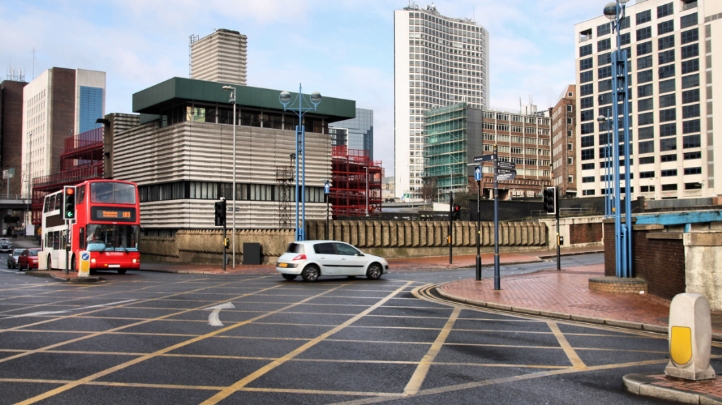
Pictured: A local bus route in Birmingham

Pictured: A local bus route in Birmingham

The full White Paper documents were published this afternoon (2 February), after the Department for Levelling Up, Housing and Communities (DLUHC) issued a statement and a summary of the White Paper’s 12 key focus areas (called ‘Missions’) this morning.

As expected, the statement and summary are headlined by a commitment to deliver system change across the UK, closing economic discrepancies between and within regions. There is also a focus on educational discrepancies and differences in healthcare and crime rates, as well as access to things like high-speed internet and quality housing.

Headline commitments include boosting public investment in R&D in the Midlands, North, South West, Scotland, Wales and Northern Ireland by 40% this decade; providing £2.6bn to local authorities and ensuring that each UK region is host to a “globally competitive city”.

These commitments are welcome, given that, last November, the National Audit Office criticized the Government for having a “limited” understanding of how to deliver levelling up effectively.

The statement from the DHLUC in the morning made no mention of net-zero, green jobs or the climate crisis. The full White Paper, however, mentions "net-zero" more than 60 times. It provides maps of emissions across the UK and of the likely future clean technology hubs outside of what the Government calls the “Greater South East”.  These include locations for wind farms, heat pump manufacturing, nuclear plants, electric vehicle (EV) manufacturing, carbon capture and storage (CCS) arrays. 

Alongside the maps, the document acknowledges that: "The net-zero transition could create huge opportunities for many of the UK’s left-behind places, but also poses risks for them which, if unmanaged, could be damaging." 

It adds: "Parts of the UK that need to undergo the largest transition lie outside the South East, often in some of the least well-performing areas of the UK... more than one in every two jobs in carbon-intensive industries are in the Midlands, the North and Scotland.

"While the transition to net-zero will be disruptive for these places, it could also be transformative. The green industrial revolution will require signifcant investment in new infrastructure and production processes using new technologies. This could average £50 to £60bn of capital investment per year by the late 2020s and into the 2030s." 

Detailed in the documents are three new ‘Innovation Accelerator’ programmes focused on Greater Manchester, the West Midlands and the Glasgow City-Region specifically. Collectively, the schemes will get £100m of funding from Government coffers. Greater Manchester's scheme will focus on materials innovation and healthcare; the focus in the West Midlands will be mobility and public health, and Glasgow will be supported to accelerate work in manufacturing-related innovations. 

Each region will develop and deliver R&D cluster plans, which must be drawn up in a multi-stakeholder approach through consortiums that represent academia and the private and public sectors. Innovate UK and UK Research and Innovation (UKRI) will be jointly responsible for overseeing the day-to-day of the Accelerators. 

Nonetheless, the full documents dedicate just three pages exclusively to net-zero - two of which are entirely picture-based. Labour has criticised the Conservatives for seemingly failing to detail any new green economy funding beyond previous commitments. 

Public transport

One of the twelve Missions is ensuring that local public transport connectivity across the UK will be “significantly closer to the standards of London, with improved services, simpler fares and integrated ticketing”. Given that transport is the UK's highest-emitting sector, this commitment ties to the need for modal shift in the net-zero transition. 

In 2020, the Ten-Point Plan promised £5bn for active travel and public transport, with £2bn going to the former and £3bn going to the latter. The Government subsequently published its Transport Decarbonisation Plan, which contained new commitments on low-carbon HGVs and aviation but little new information on buses and rail.

The Government has repeatedly been accused of focusing too much on individual EV ownership and not enough on high-quality local public transport in its plans for meeting net-zero, with critics including the think tanks Green Alliance and the IPPR.

The Levelling Up White Paper reiterates the Ten-Point Plan funding commitment and several schemes already underway, including the West Midlands' 'Sprint' project, which is delivering a bus rapid transit system, and Coventry's very light rail scheme.

It also new improvements in bus speeds, services and ticketing as part of priority schemes in West Yorkshire and the West Midlands, as well as reduced ticket prices in places including Stoke-on-Trent, Portsmouth, Luton, Derbyshire, Warrington. 

But it would appear that no new funding has been announced, beyond that already confirmed in the National Bus Strategy, City-Region Sustainable Transport Settlements and Integrated Rail Plan - all announced in 2020 and 2021. 

Spotlight on housing

The UK’s poor-quality housing stock has long been a challenge in furthering both the environmental sustainability and social sustainability agenda, with issues including energy inefficiency, fuel poverty and poor health all being systemically interlinked.

Detailed in the DLUHC’s statement are plans to effectively end Government funding for homes in London and the South East, so that construction in “Maximum Affordability Areas” will receive more support. Only 20% of funding, going forward, will be spent outside of these areas.

There are also plans to develop and implement a ‘Decent Homes Standard’ for all privately-rented homes in the UK, which should help improve public health and reduce energy and water wastage.

The documents state; "In 2020, 16% or 4 million homes failed to meet the Decent Homes Standard, down from 30% or 6.7 million homes in 2009. These improvements mean more people are living in homes which are safe, warm and meet a basic standard of decency. Despite this progress, there is more to do." 

For social housing, a new Social Housing Regulation Bill will be brought forward this calendar year. And, to help renters into homeownership, a new £1.5bn pot will be launched.

No new funding has been announced for retrofitting homes, or ensuring that new builds are more environmentally sustainable. 

Green economy reaction 

Reacting to the plans, WWF's executive director of advocacy and campaigns Katie White said: “We are facing a climate and nature catastrophe and to improve the health, wealth and wellbeing of all we should be pulling every lever to accelerate the transition to net-zero. This needs to be at the heart of UK government policies, yet it has been sidelined in the white paper.  

“If this Government wants its promise to create meaningful opportunities for communities across the UK to be taken seriously, then climate and nature goals must be front and centre of both public and private investment to level up the UK. Investing in the green transition will not only save money down the line, but communities across the UK will see direct benefits now – from well-paid green jobs, many in previously overlooked communities, to improved public transport and warmer homes.” 

Ashden's chief executive Harriet Lamb said: "We are pleased to see the emphasis on skills and devolution but then really surprised and disappointed to see the absence of green skills and commitments connected to net -zero. This White Paper - only 3 short months after COP26 - was a badly needed chance to kickstart a green industrial revolution throughout the UK and it looks like it has been missed.”

Ashden's cities manager Cara Jenkinson added: "The Government could have used this chance to kickstart a green industrial revolution throughout the UK and but it has not. We really don’t have time to watch our leaders miss opportunities like this. 

“As highlighted in a new report ‘Road to Zero Carbon: council actions on green jobs and skills’ report published today by Friends of the Earth and Ashden, councils have a deep understanding of local needs and challenges which puts them in a unique position to bring employers and colleges together to deliver local green jobs quickly. But without a long-term funding commitment from the Government to support this work, together with a genuine devolution of power, the green skills revolution will be patchy, with many parts of the country left behind."

The Aldersgate Group's executive director Nick Molho said: “The Government’s 12 missions to level up the UK set a welcome ambition to spread economic opportunities, high-quality education and a good quality of life across the country. A rapid transition to a net-zero emissions economy is going to be absolutely essential to deliver these goals in practice.

"Growing investment in renewable energy, building insulation, EVs, public transport and low-carbon industrial clusters holds the key to creating jobs, improving productivity, driving private investment and skilling up the workforce across the country. If the Government is serious about its Levelling Up ambitions, it must proceed at pace with the implementation of its Net Zero Strategy."

The Association for Renewable Energy and Clean Technology's (REA) chief executive Nina Skorupska said the organisation is "disappointed that net-zero did not play a much greater role" in the White Paper, and hopes all measures included are subjected to net-zero stress testing. 

Skorupska said: “With the right support, the renewable energy and clean technology sector could provide the catalyst to the Government’s ‘levelling up’ ambitions, creating hundreds of thousands of new jobs and generating billions in new investment across every region and country across the UK.

"We are already seeing the renewable energy sector driving regeneration in Humberside, but I want to see this success replicated on a much wider scale. But we wouldn’t have to wait to see the benefits of this approach. Amid a worsening cost of living crisis - driven in part by volatile fossil fuel prices – the need to accelerate the energy transition has never been greater. It is clear that the best way to protect households from rising energy bills is to expand the installation of domestic renewable and cleantech systems, insulate homes as quickly as possible, and deliver new housing stock which is fit for a Net Zero future. 

“I hope that the Government looks to reassess its position, place net-zero at the heart of its ‘levelling up’ agenda, and build a more equitable, more sustainable and more prosperous economy.”


UKSIF's chief executive James Alexander said: “We are hugely disappointed to see the UK’s net-zero and sustainability ambitions overlooked in the White Paper with no references made within any of the 12 ‘Levelling-Up Missions.’ The links between the UK’s 2050 net-zero objective and levelling-up are very clear to us, and we believe one cannot be achieved at the expense of the other. Creating an economy that can build the sustainable industries of the future in those parts of this country that need this investment the most will be critical to progressing both agendas.


"We also would like to have seen recognition given to the importance of promoting a just transition for those left-behind communities as we move towards a greener economy over time, and the part it can play in helping achieve levelling-up across the country in practice. We continue to support a ‘Just Transition Commission’ to help define a common language and begin work on ‘Just Transition roadmaps’ to analyse those sectors where jobs are most at risk and of the reskilling interventions needed.”


Sarah George
99% of Businesses Neglecting Social Sustainability Commitments

 Pretty damning piece from Edie:


'A sobering picture': 99% of businesses neglecting social sustainability commitments

New research has warned that 99% of large businesses are failing to adequately address key social sustainability issues, including human rights, working hours, ethical conduct and fair pay.

While most companies in the SDG2000 had commitments to health and safety, just 4% were able to disclose aspects such as paying workers living wages

While most companies in the SDG2000 had commitments to health and safety, just 4% were able to disclose aspects such as paying workers living wages

The World Benchmarking Alliance (WBA) has this week launched its Social Transformation Baseline Assessment of 1,000 companies from its SDG2000, some of the largest organisations in the world across the major sectors.

Of these 1,000 companies, the WBA found that just 1% meet the principles and practices of the Alliance’s Core Social Indicators (CSIs). These 18 indicators measure companies’ responsibility to respect human rights, their role in providing and promoting decent work, and their ethical conduct in areas such as lobbying and taxation.

More than half of the companies examine received scores of 0-5 out of 20 across these metrics. In particular, organisations are failing to provide “decent work”, which the WBA defines as fair approaches to health and safety, living wages and working hours.

The WBA found that while most companies in the SDG2000 had commitments to health and safety, just 4% were able to disclose aspects such as paying workers living wages.

Additionally, the research found that 78% of companies scored zero across three human rights indicators. Even though more than half of the companies examined had commitments to human rights, “far fewer” were able to demonstrate actions to enshrine these commitments.

With the 2030 deadline approaching for the UN’s Sustainable Development Goals, the WBA is warning that companies are neglecting key social sustainability issues.

The WBA’s social transformation lead Dan Neale said: “WBA’s research paints a sobering picture, with 99% of companies failing to demonstrate they truly value people.

“Businesses are, overall, on course to entrench, rather than end, the social inequalities that pose a global systemic risk and their inability to put people at the heart of their thinking also undermines efforts to address the risks of climate change and biodiversity loss.”


Saturday, 12 March 2022

Ukrainian Refugees - Email to Angela Richardson MP

 Dear Ms Richardson,


The Home Office has long been something of a disfunctional organisation; I need only mention the Windrush scandal and the e-borders project debacle. Ms Priti Patel cannot be blamed for these. However, the shameful and shambolic treatment of Ukrainian refugees is happening on her watch.
Please do everything you can to impress upon Ms Patel and the senior civil servants at the Home Office that their nigh-on inhuman attitude towards those devastated, exhausted and desperate people seeking refuge in this country is not what the British public expects of its legislators. Amnesty International used the word "corrosive" in describing the Home Office's actions; need I write more?

Yours sincerely

Richard Bawden

Friday, 11 March 2022

ZOE COVID study - Email to Angela Richardson MP

 Dear Ms Richardson,


It has recently been announced that the UKHSA will no longer continue to fund the ZOE COVID Study. At a time when symptomatic COVID cases are once again on the rise this is, I believe, a massive retrograde step. With over 4.5 million contributors the ZOE Study is the largest such investigation in the World and has been influential in numerous critical scientific discoveries which have undoubtedly helped to save lives. I urge you to do everything you can to ensure that this decision is reversed.

Thank you,

Wednesday, 16 February 2022

Window With Switchable Absoprtion Properties

 Fascinating! Reposted from the Times via Energy in Demand:


Scientists have developed a prototype window that can harvest heat in the winter and reflect it in the summer

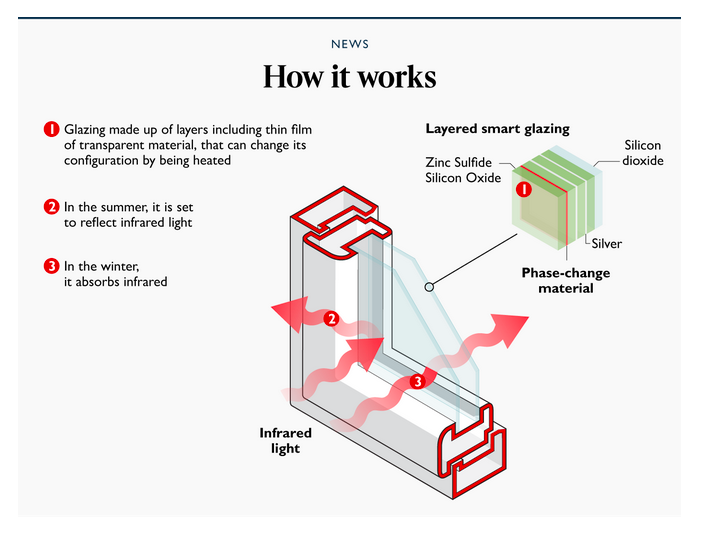
A prototype window with switchable absorption properties, so that it can be set to harvest heat in the winter and reflect it in the summer, has recently been developed. The window relies on a film just 12 nanometres thick, containing a material that changes its state when heated up to high temperatures, using a transparent heater. A transparent heater causes a structural realignment of the atoms within, shifting them between a crystalline and non-crystalline state and so altering their properties. The heater only has to be used for a fraction of a second to effect the change. Tom Whipple discusses latest developments in an article on The Times website.


Turn on the windows to keep warm

When winter comes, it is time to switch on the heating — and, perhaps, switch on the windows too?

Scientists have developed a prototype window with switchable absorption properties, so that it can be set to harvest heat in the winter and reflect it in the summer.

Crucially, in a paper in the journal ACS Photonics, they show it does so without becoming visibly darker to those in the house, as the material used is highly selective in the wavelengths of light it absorbs or reflects.

The window relies on a film just 12 nanometres thick, containing a material that changes its state when heated up to high temperatures, using a transparent heater.

A transparent heater causes a structural realignment of the atoms within, shifting them between a crystalline and non-crystalline state and so altering their properties. The heater only has to be used for a fraction of a second to effect the change.

In one state, the film reflects infrared light, keeping the room beyond cooler. In another, it absorbs the light, reradiating it into the room. In this way, the scientists believe they can improve the energy efficiency of standard double glazing by a fifth to a third.

“Importantly, visible light is transmitted almost identically in both states, so you wouldn’t notice the change in the window,” said Nathan Youngblood, from the University of Pittsburgh.

Currently, the researchers have only tried out the film on a very small panel of glass. In order to commercialise the technology, Youngblood and his colleagues need to test the technique on a window-sized area, which will also involve distributing the heating.

Ultimately, said Youngblood, they want to connect it to smart sensors, which adjust according to temperature and sunlight.

“There would be benefits to switching back and forth. Even in the winter, depending on the outdoor and internal temperature and the lighting from the sun, you may want to switch it,” he said.

Harish Bhaskaran, from Oxford University, collaborated on the work. He said there were obviously challenges ahead, but he was hopeful.

“Although significant future research is necessary before this technology can be commercialised, the results show that the concept is very promising and with further research can achieve very good efficiencies.”

UK Government Funding For Sizewell C

 This has been a sorry saga all along. Reposted from Edie:


Sizewell C: UK Government confirms £100m of funding

After a string of delays and mounting questions about how the UK Government plans to address the impending nuclear gap, it has confirmed that £100m of funding from Westminster coffers will be put towards Sizewell C.

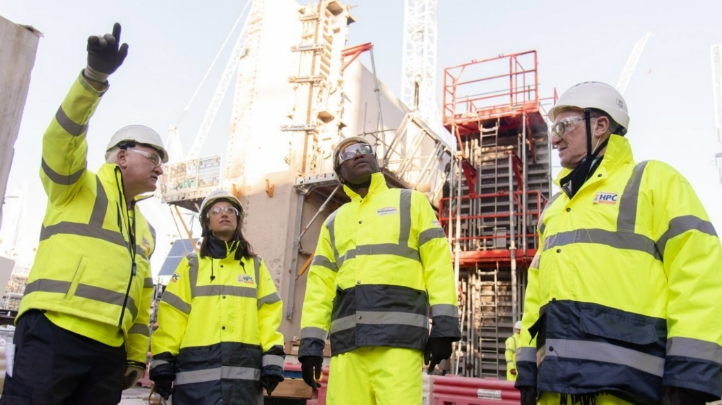
Pictured: Kwasi Kwarteng (second from right) at the Hinkley Point C site. Image: EDF

Pictured: Kwasi Kwarteng (second from right) at the Hinkley Point C site. Image: EDF

The Department for Business, Energy and Industrial Strategy (BEIS) confirmed the funding today (27 January), stating that this level of government support will “ready the project for future investment” from the private sector. The decision comes after months of negotiations between BEIS and Sizewell C’s developer EDF.

BEIS said in a statement: “The £100m option fee will be invested by EDF into the project to help bring it to maturity, attract investors, and advance to the next phase in negotiations.

“In return, the Government will take certain rights over the land of the Sizewell C site and EDF’s shares in the Sizewell C company, providing opportunities to continue to develop nuclear or alternative low-carbon energy infrastructure on the site should the project not ultimately be successful.”

Should the project be successful in reaching a final investment decision, EDF has agreed to reimburse the £100m in the form of either case or an equity stake in the project.

EDF first put forward plans to construct two nuclear reactors at the Sizewell power station site in Suffolk in 2012. A development consent order application was then submitted in 2020, and EDF subsequently applied for planning permission. Planning permission was not granted, with Suffolk County Council asking for more information on how EDF will support the local community and minimise environmental disruption, so an updated planning application is expected in the coming months.

The proposed power plant would have a capacity of 3.2GW and serve around six million homes in the UK. EDF has stated that the project would support up to 10,000 jobs and that the first generator could come online in 2024 if the planning and investment processes run smoothly.

BEIS, meanwhile, has used the announcement as evidence of its plans to address the ongoing energy price crisis and to deliver a fully “clean” electricity system by 2035.

“In light of high global gas prices, we need to ensure Britain’s future energy supply is bolstered by reliable, affordable, low carbon power that is generated in this country,” said BEIS Secretary Kwasi Kwarteng.

“New nuclear is not only an important part of our plans to ensure greater energy independence, but to create high-quality jobs and drive economic growth.”

Policy context

The Conservative Party has committed to bringing at least one large-scale nuclear project to a final investment decision in this Parliament, but emphasised that it is not exclusively committed to Sizewell C because of the funding announced today. The only other large project still actively in the pipeline is the proposed 2.9GW array at Wylfa Newydd, also known as Wylfa B. 

The commitment from the Party was made in consideration of the UK’s 2050 net-zero target and the nation’s impending nuclear gap. Almost half of the UK’s existing nuclear capacity is set to be retired by 2025. Hinkley Point B, Heysham I and Hartlepool nuclear power stations are all scheduled to retire by the end of 2024, representing more than 4GW of nominal generating capacity. 1GW Hunterston B came offline earlier this year. Another two large facilities are planning to come offline by 2030.

To help deliver the commitment, the Government is progressing the Nuclear Energy (Financing) Bill, which will change the funding model for new nuclear projects from the current Contracts for Difference (CfD) approach to a Regulated Asset Bade (RAB) funding model. Kwarteng is a staunch backer of the Bill, which is awaiting its second reading in the House of Lords.

Additionally, the Treasury announced at last year’s Spending Review that up to £1.7bn of new direct funding will be made available to take a large-scale nuclear project to the point of the final investment decision.

As well as supporting large-scale nuclear, the Government is supporting small modular reactors. It announced £210m of funding for Rolls-Royce’s work in this field in November 2021, stating that this support would also leverage £250m of private sector investment.

Industry reaction

Responding to BEIS’s announcement on Sizewell C, GMB Union’s national officer Charlotte Childs said: “This is much needed and welcome news and a massive huge stride towards a low-carbon UK. 

“We face an unprecedented energy crisis and we need nuclear projects like Sizewell C to protect consumers, workers and our planet. GMB has worked closely with EDF throughout the development of Sizewell C and look forward to the more detail discussions needed to shape industrial relations in the future.”

The Nuclear Industry Association’s (NIA) chief executive Tom Greatrex added: “This is another big step forward for Sizewell C and a big vote of confidence in nuclear. It sends a clear signal from the government to investors that it sees projects like Sizewell C as essential to our clean energy transition.

“Investment in new nuclear capacity is essential to us hitting net-zero to ensure a solid foundation of reliable low-carbon power which will strengthen our energy security. This is not only an investment in the UK’s green energy future but also in jobs and skills right across the country.”

Not all reaction has been positive, however, with some green, industry and community groups arguing that renewables with energy storage would be a better bet than new nuclear.

Greenpeace UK’s policy director Doug Parr said: "This cash injection is a tacit admission by the government that nuclear is not commercially viable, but they are so fixated on getting 20th-century nuclear technology delivered they'll just keep throwing taxpayers' money at it.

"The economics of this project are all over the place, with UK taxpayers left to pick up the tab. Instead of pursuing outdated, costly technologies, it's time the government got a grip on the clean technology race going on globally and went for 100% renewables power as fast as possible."

Sarah George