Friday, 16 January 2026

Environment taking a back seat again


Reposted from Edie.

An all-too-familiar story!

UK making ‘good progress’ against fewer than one-third of key environmental policy commitments

The UK Government is only driving good progress towards 27% of the 43 targets it set between 2021 and 2023 to improve nature for future generations.


Sarah George


UK making ‘good progress’ against fewer than one-third of key environmental policy commitments

Pictured: Nature in the Cotswolds, England.

These are some of the sobering headline findings of the latest analysis from the Office for Environmental Protection (OEP), the UK’s post-Brexit environment watchdog.

The OEP assessed progress towards 43 key targets included in the 2021 Environment Act and the 2023 Environmental Improvement Plan (EIP). Many targets were set for 2030. Issues covered include tree planting, water pollution, air pollution and public access to nature.

While the Labour-led Government did update the EIP in late 2025, the OEP did not have sufficient time to assess progress against the refreshed targets.

OEP chair Dame Glenys Stacy said: “While we have seen more progress in this year than in the previous reporting period, it was not the step-change needed.

“The Government must now decide whether or not it is going to meet those targets. What happens now matters.”

Concerning trends

Of the 43 targets and commitments which the OEP assessed progress towards, 13 were set under the Environment Act. Delivery progress towards just four of these targets was deemed “good” over the past year.

While a higher proportion of targets and commitments show good progress and a lower proportion show limited progress, compared with last year, the UK is not on track to halt nature’s decline overall.

The OEP raised particular concerns about sluggish progress in reducing residual waste from homes and businesses, and in protecting Britain’s most sensitive and biodiverse marine habitats.

Of the EIP 2023 targets assessed, the watchdog did see delivery progress improve in fields including clean air and climate change mitigation. This is partly due to the ongoing uptake of electric vehicles (EVs) and the end of coal-fired power generation.

The OEP also tracked improvements in human exposure to chemicals and pesticides.

However, the watchdog concluded that public access to and engagement with nature is on the decline. The body emphasised the importance of improving engagement in childhood as a priority.

The OEP also tracked “limited” progress in adapting the UK to the physical impacts of climate change and extreme weather. The estimated number of properties at risk of surface water flooding has increased, along with a decrease in the condition of flood or coastal risk management assets. And wildfire incidents continued to increase year-over-year.

The UK Government’s climate advisors last year classed one-quarter (26%) of adaptation outcomes as insufficient – the highest proportion to date. All outcomes related to health and well-being are, concerningly, classed as insufficient.

Opportunities for change

The OEP’s key recommendations to policymakers this year remain unchanged from last year.

They are:

  • Develop and publish a comprehensive circular economy strategy and framework
  • Set out clear mechanisms for reconciling competing demands for land and sea
  • Ensure that nature-friendly farming plans and incentives are effective and joined-up
  • Maximise the contribution of protected sites for nature
  • Accelerate action to protect and restore the marine environment

On the first two points, the Government is due to publish a Circular Economy StrategyLand Use Framework and Food Strategy later this year. All three of these packages have been delayed from 2025.

With regards to nature-friendly farming, Environment Secretary Emma Reynolds last week confirmed that the Sustainable Farming Incentive (SFI) will be reformed in 2026 following consultations with the agriculture sector.


When the Environment isn't Important

 Reposted from Edie.

Defra never did employ the sharpest knives in the box!


Defra slammed for setting up farm profitability board ‘without environmental expertise’

WWF has criticised the UK Government’s apparent decision to exclude environmental charities and ecologists from a new farming industry board intended to boost resilience and profitability across the sector.


Defra slammed for setting up farm profitability board ‘without environmental expertise’

The Department for Environment, Food and Rural Affairs (Defra) is setting up a new Farming and Food Partnership Board following a review into measures to enhance farmer livelihoods.

This review was conducted by former NFU president Minette Batters, with final recommendations published this week. It comes after polling found that three-quarters of farmers have seen reduced incomes since 2020, pushing many to diversify their business models or even leave the sector.

A statement from Defra stipulates that the new Board will include representatives from agriculture, finance and retail businesses as well as policy experts. It will be chaired by Environment Secretary Emma Reynolds and the deputy chair will be Farming Minister Dame Angela Eagle.

The statement reads: “The Board will focus on removing barriers to investment, improving how the supply chain works and unlocking growth opportunities across different parts of primary production and processing. It will have a clear emphasis on supporting agricultural productivity, homegrown British produce and strengthening food security.

WWF has expressed concern about the Board’s proposed makeup. It stated that the proposed membership of the Board is “envisaged without environmental expertise”, at a time when extreme weather is harming farm productivity and biodiversity is in decline.

“A strong, profitable domestic farming sector only contributes to food security when it also protects and enhances the natural capital which sustains food production: a stable climate, healthy soils, clean rivers and abundant wildlife,” said WWF’s policy lead on production, Sofia Parente.

Even the NFU said the notes fall short on the environment, as they provide no clarity on when the Sustainable Farming Incentive (SFI) will re-open for applications following its abrupt closure this spring.

Defra’s notes on the Board do make passing reference to climate resilience. For example, it will advise the Government on how best to reform the planning system to speed up the delivery of on-farm reservoirs, which will help farmers cope with droughts.

The notes also refer to unlocking private investment into “farm transformation”.

Strategic approach needed

The review has been published as Defra works with other Government departments to finalise a new land-use strategy. This will set out how competing demands for land, from activities such as housebuilding, energy infrastructure expansion, fuel production, nature conservation and farming will be strategically managed.

2026 should also see the UK Government updating the National Food Strategy. The previous iteration, published under the Conservatives, was widely criticised for excluding the majority of expert recommendations made by review lead Henry Dimbleby and his team.

Batters’ review concluded that, without these overarching plans, farmers are “taking decisions in isolation” without confidence in a coordinated direction of travel for the long run.

The poultry problem

Nature NGOs are concerned that Batters’ review states that the UK has “significant untapped potential” to increase the domestic production of horticulture products and poultry.

There are fears that this could, in practice, mean the creation of many more industrial chicken farming units.

The Soil Association last year published an analysis of the ecological state of stretches of the River Wye, concluding that increasing algae blooms are attributable to phosphate and nitrogen pollution.

Similar issues are visible along stretches of river in Shropshire, Yorkshire, Gloucestershire, Lincolnshire, Powys and Herefordshire.

The blame for the problem has been placed at the foot of large-scale industrial chicken farms. Most deny responsibility and claim that they properly manage animal wastes and chemical inputs.

“Farmers operating these units are often doing so out of financial necessity and need a viable alternative,” said the Soil Association’s head of food policy Rob Percival. “Urgent Government action is needed.”


Reposted from Edie.

It's not just forced labour that's at issue. Plenty of the stuff coming into the country, especially from SE Asia, is produced by people working for less than anything representing a minimum wage. Inequality is rampant everywhere.


UK ‘risks becoming dumping ground’ for products linked to modern slavery

As the EU and other markets modernise regulation in this field, the UK needs new legislation to tackle modern slavery domestically and end the import of products produced with forced labour.


Sarah George


UK ‘risks becoming dumping ground’ for products linked to modern slavery

This is the call to action from the Independent Anti-Slavery Commissioner (IASC), following a review which found that forced labour costs the UK around £60bn each year – equivalent to about 2% of GDP.

The review additionally found that the UK imports around £20bn worth of goods each year which are likely linked to forced labour in their supply chains. The Commissioner warned that this figure is likely to increase as other nations clamp down on these imports, leaving the UK as a “dumping ground for goods which were blocked by others”.

Changes to legislation

With these challenges in mind, the 2015 Modern Slavery Act is no longer sufficient, the IASC concludes. The Act requires all large businesses to publish a statement on how they manage slavery risks in their operations and supply chains.

New legislation to tackle this challenge, without over-burdening businesses and private sector bodies already navigating complex rules, is set out in the IASC’s review conclusion.

The proposed design of the legislation has been drawn up with input from trade unions, businesses and human rights experts in the UK and beyond, as well as the general public in Britain.

Public polling found that four in five Brits would welcome new laws to prevent goods made with forced labour from entering the UK market.

The IASC’s proposed new legislation would prohibit forced labour-risk products from the UK market, placing the burden of compliance on importers and retailers. It would also confer new duties on Ministers to protect human rights in supply chains, while compelling businesses found to have committed serious harm to take appropriate remedial action.

The Fairtrade Foundation has stated that, should such legislation be introduced, it must be more closely tied to UK efforts to tackle environmental harms in supply chains.

“Environmental harm and human rights abuses are two sides of the same coin in supply chains, and the government must restrict both,” the Foundation said in a statement.

“It would be an unacceptable oversight to limit supply chain transparency only to human rights abuses.”

The Foundation is one of several NGOs supporting a new Human Rights and Environmental Due Diligence (HREDD) law, aligning the UK’s approach to that of many other nations and preparing for mounting international legal cases over ecocide.


Truly Bonkers - Dismantling of NCAR

 Reposted from the Washington Post

This is the Trump administration at its worst.

Trump officials to dismantle ‘global mothership’ of climate forecasting

Russell Vought, who directs the White House Office of Management and Budget, announced plans to split up the National Center for Atmospheric Research in Boulder, Colorado, citing concerns about “climate alarmism.”

Updated December 17, 2025

By Ruby Mellen  and  Carolyn Y. Johnson

The Trump administration said Tuesday it was breaking up one of the world’s preeminent Earth and atmospheric research institutions, based in Colorado, over concerns about “climate alarmism” — a move that comes amid escalating attacks from the White House against the state’s Democratic lawmakers.

“The National Science Foundation will be breaking up the National Center for Atmospheric Research (NCAR) in Boulder, Colorado,” wrote Russell Vought, the director of the White House Office of Management and Budget on X. “This facility is one of the largest sources of climate alarmism in the country.”

The plan was first reported by USA Today.

The NCAR laboratory in Boulder was founded in 1960 at the base of the Rocky Mountains to conduct research and educate future scientists. Its resources include supercomputers, valuable datasets and high-tech research planes.Ask The Post AIDive deeper

The announcement drew outrage and concern from scientists and local lawmakers, who said it could imperil the country’s weather and climate forecasting, and appeared to take officials and employees by surprise.

NCAR’s dismantling would be a major loss for scientific research, said Kevin Trenberth, a distinguished scholar at NCAR and an honorary academic in physics at the University of Auckland in New Zealand.

Trenberth, who joined NCAR in 1984 and officially retired in 2020, said the research center is key to advanced climate science discoveries as well as in informing the climate models that produce the weather forecasts we see on the nightly news.

Colorado Gov. Jared Polis (D) said in a statement that the state had not received information about the administration’s intentions to dismantle NCAR.

“If true, public safety is at risk and science is being attacked,” Polis said. “Climate change is real, but the work of NCAR goes far beyond climate science. NCAR delivers data around severe weather events like fires and floods that help our country save lives and property, and prevent devastation for families.”

The action comes as Republicans have escalated their attacks on Polis and others in the state for their handling of a case involving Tina Peters, a former county clerk in Colorado who was convicted in state court on felony charges related to efforts to overturn the 2020 presidential election. President Donald Trump announced last week that he is pardoning Peters, who is serving a nine-year sentence, but it is unclear whether Trump has that authority, because she was not convicted in federal court.

In a joint statement, Colorado’s two Democratic senators, John Hickenlooper and Michael Bennet, and Rep. Joe Neguse (D-Colorado) slammed the move and vowed to fight back against it.

In his social media post, Vought said that “any vital activities such as weather research will be moved to another entity or location” — but did not specify further.Ask The Post AIDive deeper

“The Colorado governor obviously isn’t willing to work with the president,” said a White House official, who spoke on the condition of anonymity because they were not authorized to discuss the matter publicly.

The official declined to cite any specifics about how Polis is refusing to cooperate from the administration’s perspective, but denied that the move was in response to the state’s refusal to release Peters from prison.

The facility “is not in line with the president’s agenda,” the official added, noting that it had “been on the radar” of the administration “for a while.”

The National Science Foundation, the federal science agency that funds the center, was blindsided by the announcement, according to a person familiar with NSF operations who spoke on the condition of anonymity to avoid retribution. But they said facilities managers at NSF will need to be involved in moving assets or capabilities.


NSF released a statement Wednesday saying the agency would publish a letter outlining next steps. It said that the agency would transfer the NCAR-Wyoming Supercomputer, used to support Earth science research, to another operator. It will also sell off or transfer two NSF aircraft that NCAR manages and operates.

The agency will also “redefine the scope of modeling and forecasting research and operations to concentrate on needs such as seasonal weather prediction, severe storms, and space weather.”

Antonio Busalacchi, the president of the University Corporation for Atmospheric Research, which oversees NCAR, said it was aware of reports to break up the center but did not have “additional information about any such plan.”

“Any plans to dismantle NSF NCAR would set back our nation’s ability to predict, prepare for, and respond to severe weather and other natural disasters,” Busalacchi said.

An internal email obtained by The Washington Post, sent Tuesday night, emphasized the critical work NCAR does for “community safety and resilience.”

Busalacchi wrote that the news had come as a shock, and the institution had reached out to NSF for more information. “We understand that this situation is incredibly distressing, and we ask that you all continue doing what you have done so well all year — provide support for one another as we navigate this turbulent time,” Busalacchi wrote.

The center is “quite literally our global mothership,” Katharine Hayhoe, a Texas Tech University professor and chief scientist for the Nature Conservancy, wrote on X. “Dismantling NCAR is like taking a sledgehammer to the keystone holding up our scientific understanding of the planet.”

NCAR plays a unique role in the scientific community by bringing together otherwise siloed specialists to collaborate on some of the biggest climate and weather questions of our time, Caspar Ammann, a former research scientist at the center, said in an email.

“Without NCAR, a lot could not happen,” he said. “A lot of research at US Universities would immediately get hampered, industry would lose access to reliable base data.”

Ammann added that around the world, weather and climate services use NCAR modeling and forecasting tools.

The Colorado-based center draws scientists and lecturers from all over the world, and through its education programs has helped produce future scientists, Trenberth said.

He said he feared not just for the discoveries and data that would be lost if the center were to close, but for the early careers that could also be affected or destroyed.

“If this sort of thing happens, things will go on for a little while,” he said. “But the next generation of people who deal with weather and science in the United States will be lost.”

Natalie Allison and Ben Noll contributed to this report.


Friday, 14 March 2025

Boost to EV charging

 Much needed! Repost from Edie.


Government announces £40.8m boost for EV charging in the Midlands

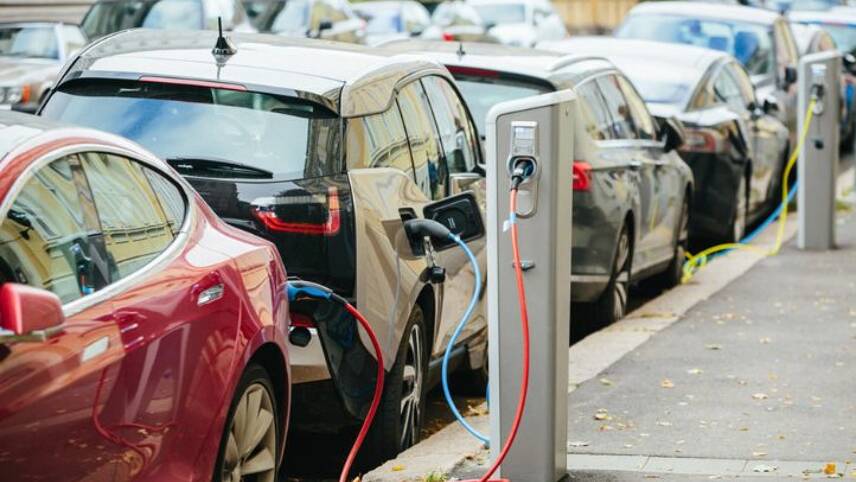
Government has announced a major expansion of electric vehicle (EV) charging infrastructure in the Midlands, with more than 16,000 new chargepoints planned.

Published 7th March 2025

Save

Government announces £40.8m boost for EV charging in the Midlands

The UK’s public chargepoint network currently stands at around 74,000 available chargers.

The Department for Transport has confirmed today (7 March) that 13 local authorities, supported by Midlands Connect, have secured £40.8m from the Local EV Infrastructure (LEVI) Fund to support the rollout.

The LEVI Fund aims to accelerate the commercialisation of, and investment in, the local charging infrastructure sector.

The new funding will improve access to charging, particularly for those without off-street parking, and will extend infrastructure into smaller towns and rural areas.

It forms part of Labour’s pledge to allocate £2.3bn to ease the UK’s transition to EVs, while creating create jobs and strengthening the UK’s clean energy sector. Last week, it announced £120m to help businesses and individuals buy zero-emission vans, taxis and electric motorcycles.

Future of Roads Minister Lilian Greenwood said: “Making charging as seamless and as easy as possible is crucial to making the switch to electric a success and rolling out over 16,000 chargers across the Midlands will make driving an EV cheaper and easier, especially for those without a driveway.

“EVs will power growth, cut emissions and improve lives in the Midlands and beyond as we continue to deliver our Plan for Change.”

The UK’s public chargepoint network currently stands at around 74,000 available chargers, of which nearly 20,000 were added in the past year.

Charging hubs for HGVs

In a related development, Innovate UK has announced that 54 new charging hubs for zero-emission heavy goods vehicles (HGVs) will be built under its Zero Emission HGV and Infrastructure Programme.

The hubs will be located at depots, motorway services and key transport routes across the UK, providing charging and hydrogen refuelling for freight operators.

The announcement was made at the Zero Emission HGV and Infrastructure Demonstrations summit in London, where more than 400 businesses discussed the future of the freight sector.

The charging hubs will be developed through four key partnerships—Project Electric Freightway, eFREIGHT2030, ZENFreight and HyHAUL—to establish a nationwide network for zero-emission freight transport.

The Government says the investment will ensure EV drivers and freight operators have reliable access to charging, regardless of location.

Innovate UK’s knowledge transfer manager for zero emission mobility Simon Buckley said: “The announcement of 54 new infrastructure hubs marks a transformative moment for the UK’s freight industry.

“By strategically placing these hubs across the country, we are addressing one of the biggest barriers to zero-emission HGV adoption: reliable infrastructure.

“This programme not only accelerates the transition to cleaner transport but also strengthens supply chain resilience, ensuring businesses can move goods sustainably without compromising efficiency.”

Another pathetic supine US company

 Is there no end to the list of a***-licking, supine US companies? Reposted from Edie.

An outrageous abdication of responsibility’: Wells Fargo drops net-zero targets

Banking giant Wells Fargo & Co has abandoned a commitment to reach net-zero financed emissions, stating that it will instead “meet clients where they are in their chosen energy and transition strategies”.

Author avatar image

Published 3rd March 2025

Save

‘An outrageous abdication of responsibility’: Wells Fargo drops net-zero targets

The US-based bank confirmed late last week that it will no longer strive to deliver net-zero financed emissions by 2050. It is also scrapping interim 2030 targets on financed emissions, which had been set on a sector-specific basis for several high-carbon sectors including steel, automotive manufacturing, aviation and oil and gas.

Financed emissions – those generated by the companies and projects which a bank supports – are the largest source of any large financial firm’s climate footprint. For example, Standard Chartered last week confirmed that its financed emissions account for more than 98% of its total emissions.

A statement from Wells Fargo said it is “adjusting our approach to focus on doing what banks do best – providing financing and expertise to help clients pursue their own objectives”.

The statement argues that the bank has always been clear that achieving its financed emissions targets would depend on “many factors outside our control”, including “public policy, consumer behavior, and technology changes”.

“Many of the conditions necessary to facilitate our clients’ transitions have not occurred,” it adds.

Market conditions will likely deteriorate further in the US in the coming years as President Donald Trump seeks to undo predecessor Joe Biden’s work to scale investment in renewable energy, electric vehicles and nature while unlocking more opportunities to expand fossil fuel production.

Trump has pulled the US out of the Paris Agreement for a second time, starkly reducing the proportion of global GDP covered by national-level climate targets.

Following last November’s US election, Wells Fargo and several of its peers withdrew from the Net Zero Banking Alliance. This trend also impacted similar collaborative initiatives including the Net Zero Asset Managers initiative (NZAM), which in January suspended its activities as a result of the fallout.

Wells Fargo is maintaining an ambition to deploy $500bn in financing for low-carbon and otherwise sustainable activities by 2030. To date, $178bn has been deployed.

Environmental organisations have slammed Wells Fargo for its decision, which is the first of its kind from a bank of this scale. While HSBC weakened its net-zero targets last month, it ultimately kept some 2050 ambitions.

Sierra Club’s sustainable finance campaign director Ben Cushing said: “Wells Fargo’s decision to abandon its net-zero targets is an outrageous abdication of responsibility.

“Instead of using its significant influence to drive the energy transition and address the climate crisis, the bank is hiding behind the excuse that it can only passively follow its clients’ actions. Real-world decarbonization must happen across the economy, but banks play a critical role in shaping market dynamics through their financing and client engagement decisions.

“As the world’s fifth-largest financier of fossil fuels since the Paris Agreement, Wells Fargo has actively fuelled the climate crisis while now attempting to shift the blame onto everyone else. This retreat is both cowardly and shortsighted.”

Reclaim Finance’s senior analyst Paddy McCully added: “Wells Fargo is cravenly following the extreme anti-climate agenda of the Trump regime.

“While its emission targets, like its overall climate policies, were extremely weak, the bank at least recognised that it had a responsibility to act on climate. By saying now that it will just help its clients do their own thing, Wells Fargo is abdicating all of its climate responsibilities and saying that if its clients want to go ahead and cook the planet, Wells Fargo will be there for them.”