Thursday, 11 July 2024

FCA Ani-Greenwash Rules

 About time. Reposted from Edie:


‘A great step in the right direction’: FCA’s anti-greenwash rules enter into force

New anti-greenwash guidelines and standards for asset managers from the UK’s Financial Conduct Authority (FCA) are now in force.

Published 31st May 2024

Save

‘A great step in the right direction’: FCA’s anti-greenwash rules enter into force

Nearly 60 banks collectively provided $705.8bn to firms involved in in the fossil fuel sector last year.

Late last year, the FCA confirmed plans to introduce new measures to prevent asset managers from misleading investors about the environmental and social impacts of their funds.

Today (31 May), these anti-greenwashing rules have come into force.

Asset managers will now be required to adhere to the new Sustainability Disclosure Requirements (SDR) rules. These rules prohibit vague references to ‘sustainability’, ‘ESG’, or related terms in fund marketing. Instead, asset managers will be required to provide “clear, complete” information and select one of four specific fund labels.

The labels are ‘Sustainability Focus’, ‘Sustainability Improvers’, ‘Sustainability Impact’ and ‘Sustainability Mixed Goals’.

Asset managers will need to demonstrate that at least 70% of the fund’s assets support the chosen label.

Moreover, firms will be required to provide consumer-facing disclosures about a fund’s sustainability activities; offer detailed pre-contractual and ongoing disclosures at both entity and product levels for labelled or sustainability-referenced products; adhere to naming and marketing rules that restrict the use of certain sustainability terms to ensure accurate claims;and comply with additional rules for UK distributors, including the provision of product-level information.

Looking forward, the FCA is also consulting on extending SDR to portfolio managers. The proposed labelling and SDR for portfolio managers includes ensuring that product labels are accurate to help consumers understand what their money is being used for, and introducing marketing requirements to ensure that environmental claims are backed up.

Implementation guidance

The FCA issued new guidance last month to help the industry meet these new standards. Guidance includes good and poor practice examples of greenwashing to help firms implement the rule.

Furthermore, the UK Sustainable Investment and Finance Association (UKSIF) and PwC have released an implementation roadmap to help financial firms navigate the challenges of complying with the new SDR guidelines. The ten recommendations include:

  • Carefully choose product labels under the SDR, balancing commercial benefits and stakeholder expectations.
  • Ensure compliance with the 70% sustainability threshold for labelled funds.
  • Create a firm-wide product classification framework for SDR and international regulatory coherence.
  • Engage early with distributors to align on product sustainability features and labels.
  • Conduct a comprehensive greenwashing review firm-wide.
  • Develop an internal taxonomy to identify and prevent greenwashing.
  • Focus sustainability reporting on what is most relevant to the business and clients.
  • Streamline data collection and integrate existing reporting processes.
  • Align reporting cycles with TCFD reporting when possible.
  • Adopt a strategic, long-term approach to reporting for organisational value.

UKSIF’s chief executive James Alexander said: “This regulation can empower our members to better demonstrate and evidence their sustainable investment approaches and strategies in an environment where consumers are increasingly looking to put their money into funds that more closely align with their values.

“We are committed to supporting our members to take full advantage of the opportunities of the FCA’s SDR and help guide them through this first crucial year of implementation.”

The investor community has welcomed the FCA’s new SDR guidelines, with some calling it “a great step in the right direction.”

Industry reaction

Carla Nunes, managing director, Kroll:

“This FCA rule is a great step towards the protection of investors, and in particular retail investors who may not have the necessary knowledge to ascertain whether certain claims by investor managers are being misleading.

“The transition of the global economy into a more sustainable world will require massive investments towards the green energy transition.

“If investor confidence in products designed to finance such a transition is shaken or put into question, capital allocation into those products will suffer. That, in turn, may have negative consequences for the planet overall and its people so this ruling is a great step in the right direction.”

Angela Hultberg, global sustainability director, Kearney:

“As consumers become more environmentally conscious, there is a growing temptation for companies to make misleading claims about their ESG credentials and engage in rhetoric that exaggerates their actual impact.

“It’s high time firms moved beyond merely making their products and services sound environmentally friendly to genuinely creating sustainable solutions.

“Under the new guidance, companies will have to make evidence-based product labels that clearly explain to consumers what their money is being used for. This will build further trust with consumers, allowing them to make more informed choices, and to have a genuinely positive impact on our planet.”

Richard Weighell, financial services advisory partner, BDO LLP:

“While the final guidance was only published last month, firms have had a significant amount of time to prepare for the introduction of the FCA’s anti-greenwashing rule.

“By now, they should have substantially completed their programmes of work to ensure sustainability-related claims in their communications are clear, fair and not misleading.

“Given the long lead time ahead of the introduction of the rules, we expect the FCA to immediately be monitoring firms.”

Paul Hamalainen, global sustainable finance and UK prudential policies director, Mazars:

“As the anti-greenwashing rule comes into force [today] it is good that the FCA has supplemented the rule with guidance on regulatory expectations and examples of good and bad practices.

“Now it is down to companies to undertake a drains-up assessment of their sustainability practices and promises to ensure they are operating in accordance with the guidelines and the requirements for public disclosure. Firms shouldn’t underestimate how long this could take.”

Ruth Knox, global co-chair of the ESG & sustainable finance practice, Paul Hastings:

“Today the FCA’s anti-greenwashing rule comes into effect, with the purpose of ensuring sustainability claims are fair, clear and not-misleading.

“While there has historically been some confusion on whether anti-greenwashing guidance emanating from the FCA extends beyond retail, new guidance is very clear, and clearly addresses market feedback on the difficulty of labelling products – as a result, we can expect the FCA to be steadfast in upholding the rule moving forward.”

Tuesday, 23 April 2024

‘Embarrassing failure’: UK ranks last in green spending among major European economies

 Well, would you expect anything less from our pathetic government? Reposted from Edie:


A new Greenpeace analysis has revealed that the UK ranks last on green spending out of the five biggest Western European economies, lagging behind France, Germany, Spain and Italy.

Published 5th March 2024

Save

‘Embarrassing failure’: UK ranks last in green spending among major European economies

In terms of fuels and technology innovation, the UK lags behind.

The analysis examines the International Energy Agency (IEA)’s government energy spending tracker from 2020 to 2023.

According to the data, the UK Government spends the least in total out of the five major countries, ranking the lowest for per capita green energy spending.

Additionally, it spends the lowest amount on low carbon transportation, compared to rest of the four nations, despite transport being UK’s largest emitting sector for greenhouse gas (GHG) emissions, accounting for 23% of the UK’s total emissions in 2022.

Italy invests significantly more than the UK in low-carbon and energy-efficient transport, allocating $47.8bn compared to the UK’s $13.1bn. Similarly, Germany’s investment in this sector is nearly three times that of the UK, totalling $38.1bn.

In terms of fuels and technology innovation, the UK lags behind all five countries analysed.

When it comes to energy-efficient buildings, households and industry, the UK ranks second to last among the major Western European economies. France outspends the UK nearly twofold in this category, allocating nearly $28.5bn compared to the UK’s $14.6bn.

Despite having similar population sizes, France’s per capita spending on green initiatives surpasses that of the UK by almost double, with $952.40 per capita compared to the UK’s $494.43 per capita.

Greenpeace UK climate campaigner Georgia Whitaker said: “It’s clear that despite the Government’s bluster, we are utterly failing on the world stage when it comes to green investment.

“Not only are the US and China leaving us in the dust in the race on green technology, we’re also doing terribly compared to our European neighbours.”

Recent research revealed that nearly two-thirds of UK energy companies have either shifted or intend to shift investments away from the UK to a market with supportive policies for their sustainability goals, risking a potential £115bn investment.

Whitaker added: “Jeremy Hunt should use the Spring Budget to address this embarrassing failure, but instead he’s flirting with tax cuts that disproportionately benefit the wealthiest. Meanwhile, the rest of us struggle on with the cost of living.

“We urgently need a bold green industrial strategy to boost our flailing economy, help ordinary people with the cost of living, and tackle the climate crisis. Green infrastructure investment, with a focus on renewable energy, insulating our homes and making transport greener would do just that.”

Chancellor Jeremy Hunt is due to deliver his Spring Budget tomorrow (6 March) and the green economy is calling for the creation of a Net-Zero Investment Plan, including sector-specific emissions pathways and technology trajectories to tackle energy poverty and achieve clean economic growth.

Expand Oil Production - Receive Bonus, How Does That Help?

 This article reposted from Edie reveals the cynicism at the heart of the oil and gas industry.


Report: Oil and gas giants financially rewarding execs for expanding production

An analysis of the executive pay policies at large oil and gas firms has revealed that virtually all of them provide financial rewards for expanding production, hampering board-level preparation for the energy transition.

Author avatar image

Published 29th February 2024

Save

Report: Oil and gas giants financially rewarding execs for expanding production

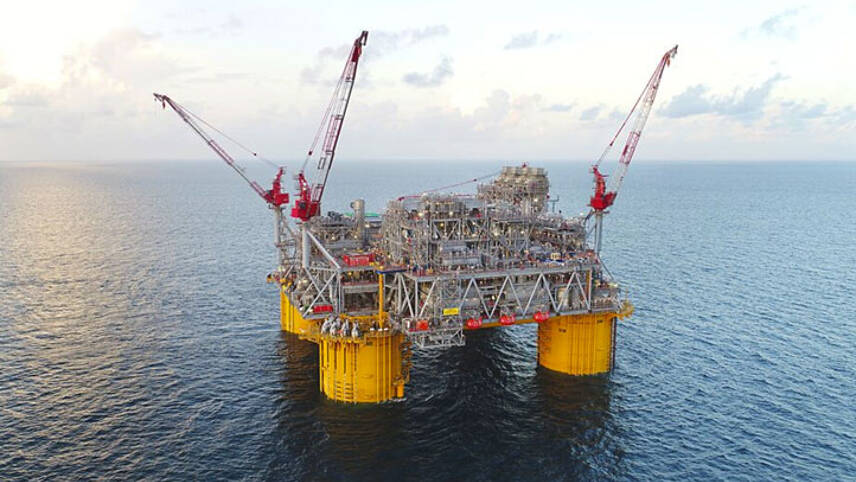
Image: The Shell Appomattox deep-water asset, Gulf of Mexico. Image: Shell.

The analysis, conducted by Carbon Tracker, assessed 25 of the world’s largest listed oil and gas firms. All but one – Occidental Petroleum, based in Texas – incentivise executives to expand fossil fuel production.

Carbon Tracker has warned that this sends a conflicting message at companies that have set targets to cut production. For example, Eni and Repsol have both pledged to cut production by 30-35% this decade, but link more than one-fifth of their executive pay packages to KPIs that entail expanding production.

The analysis reveals a growing and worrying trend towards companies framing expanded gas production as a ‘low-carbon’ option in KPIs. This was found to be the case at firms including BP, ExxonMobil, Chevron and TotalEnergies.

The International Energy Agency (IEA) has repeatedly stated that transitioning the global energy system to net-zero by 2050 entails ending all upstream oil and gas projects with long lead times, beyond those already granted permission before 2021.

Moreover, even though current policy infrastructure and market trends are not aligned with this emissions reduction trajectory, the Agency is nonetheless expecting global oil demand to peak in 2028 and global gas demand to peak in 2030.

Carbon Tracker is warning that executives at oil and gas majors are ill-prepared to strategise around the accelerating pace of the energy transition. It is urging them to plan to decrease production over time and, if they do not do this voluntarily, for investors to exert pressure.

“The energy transition is accelerating, and oil and gas companies must plan for peaking demand for their product,” said Carbon Tracker’s lead for oil, gas and mining, Mike Coffin.

“Investors should be concerned executives are continued to be incentivised to grow production volumes and develop new long-cycle assets, particularly if this is contrary to stated company strategy. Asset owners and asset managers should use their votes accordingly to ensure that executives are acting in their best long-term interests.”

It bears noting that several of the 25 companies have decreased the proportion of executive pay linked to expanded production since 2020.  TotalEnergies decreased this from 13% to 4%, for example, while the reduction at EQT was the steepest, from 30% to 3%.

The research from Carbon Tracker follows on from its study last month which concluded that oil and gas operators in the North Sea are likely to see a drop of at least 63% in aggregate cash flows from existing extraction and exploration assets by 2030, compared with their expectations.

Monday, 26 February 2024

 UK Government ministers are so obviously desperate:

Reposted from Edie


MPs seek certainty over environmental impact of UK’s largest post-Brexit trade deal

MPs on the Business and Trade Committee are calling for the Government to allow lawmakers to debate and vote on the UK's accession to the Comprehensive and Progressive Agreement for Trans-Pacific Partnership (CPTPP) trade bloc, partly due to environmental worries.


MPs seek certainty over environmental impact of UK’s largest post-Brexit trade deal

Last year, Prime Minister Rishi Sunak announced the UK’s intention to join the CPTPP after two years of negotiations, marking it as the country’s most significant post-Brexit trade deal yet.

The agreement is expected to facilitate increased trading opportunities with nations such as Australia, Japan and Mexico across various industries including food and drink, automotive, services and technology.

British Ministers claim that the deal will yield an additional £1.8bn in income for the UK over the next decade, supplementing revenue from existing bilateral trade agreements with some members.

However, MPs argue that estimating the benefits of CPTPP and its impact on economic growth remains challenging, particularly as Business and Trade Secretary Kemi Badenoch distanced herself from economic modelling produced by her own civil servants.

Business and Trade Committee’s chair Liam Byrne said: “Today, the Government’s target of covering 80% of trade with free trade agreements is beyond reach and we are off-track to meet the target of £1trn of exports by 2030.

“That is why CPTPP is important. But, for all its merits or drawbacks, if we’re serious about Parliamentary sovereignty, Government must let MPs debate the deal and vote on it.

“We need some hard-headed analysis of the economic benefits of the trade deals ministers propose to signs. It is simply not good enough for Secretaries of State to cast aside numbers produced by their own department, without providing their own figures.”

Controversial impacts of the agreement

Moreover, the MPs are also urging for a parliamentary vote due to the controversial environmental and ethical aspects of joining the trade bloc.

Concerns are high about the potential impact on UK safeguards regarding imports of controversial agri-food products, such as beef and pork treated with growth promoters, agri-food produced using pesticides banned in the UK, and palm oil linked to deforestation.

The Trade and Agriculture Commission has warned of potential increased imports of such products due to tariff reductions under the CPTPP, presenting a cost advantage over UK producers who are legally held to higher sustainability standards.

Moreover, contentious provisions within the agreement allowing foreign investors to sue governments over actions affecting their profits have raised alarms about the UK Government’s regulatory autonomy, particularly concerning the English water industry.

Worker rights implications also raise red flags, with concerns raised by the Trade Union Congress (TUC) regarding trade with nations like Malaysia, where evidence of forced labour exists, and Vietnam, where workers’ rights to unionise are restricted.

In response to these concerns, the Business and Trade Committee is urging  a debate and vote on the trade deal during the 21-day scrutiny period under the Constitutional Reform and Governance Act 2010.

It is also calling for a revised impact assessment from the Government outlining the expected gains from CPTPP membership, and for clarity on measures to ensure UK businesses fully optimise the treaty’s benefits.