Monday, 21 March 2022

Distributed Generation Anyone?

 Back in the days when I had to don a suit every weekday morning we were talking about the importance of distributed generation. Now, 20 years on, what do we have people calling for? Well, see this repost from edie:


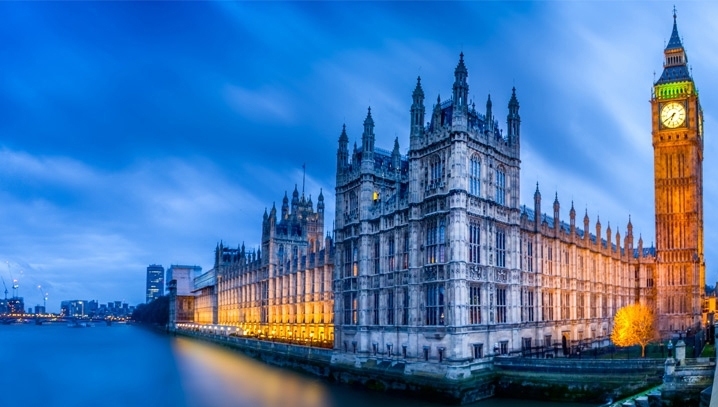
MPs and local authorities back Local Electricity Bill to reduce reliance on imports

More than 300 MPs, including Labour leader Sir Keir Starmer and the chairman on the 1922 Committee, and 100 local authorities have backed a new "Local Electricity Bill" aimed at promoting renewable sourcing projects across the UK and move away from foreign gas imports.

The campaigners argue that the Bill could enable community renewable energy capacity to grow twentyfold by 2030 to account for 10% of UK electricity generation

The campaigners argue that the Bill could enable community renewable energy capacity to grow twentyfold by 2030 to account for 10% of UK electricity generation

The Local Electricity Bill has been championed by the campaign group Power for People, with the aim of enabling communities across the UK to source local clean energy. This, in turn, would reduce the UK’s dependency on volatile gas imports.

Power for the People has today announced that more than 300 MPs, including 116 Conservatives, and 102 local authorities have now backed the bill.

Power for People’s Director, Steve Shaw, said, “The biggest threat to human civilisation and the natural world is climate breakdown. Global emissions have increased by over 400% since 1950, with levels of CO2 at their highest concentration in the past two million years. It is not too late to turn things around - I know the power of campaigns like this.

“The enormous emissions reductions the Local Electricity Bill aims to bring must be a key pillar in our mission to avert climate catastrophe whilst making our energy system more robust and boosting local jobs and the economies of communities across the country.”

Currently, UK customers can purchase electricity from nationally listed utilities. Organisations that are also supporting the Bill – including WWF, Greenpeace, Friends of the Earth and the RSPB – believe that more powers need to be issued to power community renewable energy projects.

The campaigners argue that the Bill could enable community renewable energy capacity to grow twentyfold by 2030 to account for 10% of UK electricity generation.

The group is now calling for more MPs and the Government to back the Bill. Currently, supporters of the Bill, including Conservative MP, David Johnston, are in talks with the Government’s Energy Minister, Greg Hands MP, and his department.

In his response, the Energy Minister stated: “The Government recognise the role community and locally-owned renewable energy schemes can and do play in supporting the UK’s national net-zero targets … [Community groups] can be a catalyst in the promotion of behaviour change, which we all know is vital to reaching net zero.”

Russian sanctions

The UK has this week made a landmark decision to stop importing Russian oil and related projects this year.

The Department for Business, Energy and Industrial Strategy (BEIS) said in a statement that the phase-out will “allow the UK more than enough time to adjust supply chains” but will also “step up the international pressure on Russia’s economy. The UK has already banned Russian ships from UK ports.

Russia is the world’s third-largest oil producer and exporter, beyond only the US and Saudi Arabia. Oil accounts for 44% of all Russian exports, generating 17% of the Russian federal government’s annual revenues. Yet, because of Russia’s invasion of Ukraine, its export markets are fast dwindling.

The UK is not the only major economy to announce fresh measures to end Russian fossil fuel imports. The European Commission has outlined plans to accelerate some of the EU's plans on renewables and gas storage, with the ultimate aim of becoming independent from Russian imports “well before” 2030. These plans have been called ‘REPowerEU’. They will shortly be put to the bloc's Member States at a meeting in Versailles.

Elsewhere, US President Joe Biden has today announced a ban on all Russian energy imports, starting with oil, which will be phased out in 2022.

Matt Mace

Ending Imports of Oil from Russia

 It was always a stupid idea because it's been obvious for years that Vladimir Putin is an unmitigated sh*t but now the UK government has pledged to cut all imports of Russian oil by the end of this year. This country is in the fortunate position of not actually importing that much - for mainland Europe the situation is a lot more difficult.

There is a saying that democracy is the least worst form of government and the current crisis certainly demonstrates that it's a better bet that totalitarianism. I'm just massively ashamed that those in power in this country were so greedy for Russian money - most of it stolen for the poor benighted citizens who are now being lied to on a grand scale.

Further Expansion to ULEZ?

 Sadiq Khan is looking to expand the London ULEZ to cover the whole of greater London next year. My reading of the current situation is that although it's hitting some pockets the ULEZ has been successful in lowering NOx emissions and presumably CO2 ones as well. Overall that has to be a good thing so a further expansion is probably warranted.

Plastics Treaty

 At last, something going in the right direction. This is a repost from EDIE:


'A key moment in the effort to eliminate plastic waste': Green groups react to the UN plastics treaty

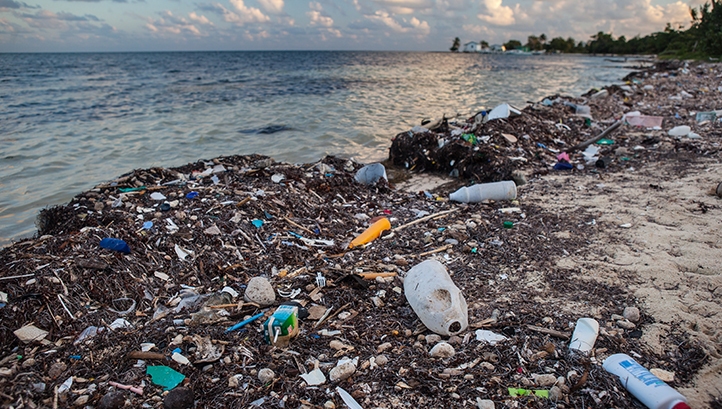
The United Nations has come to an agreement on the terms for a landmark global treaty to stop plastic pollution across the globe, a decision that has been unanimously welcomed by green groups.

Green groups have been quick to point out the momentum this could generate

Green groups have been quick to point out the momentum this could generate

The UN meeting, known as UNEA 5.2, came to a close on Wednesday in Nairobi after more than a week of negotiations between UN member states on topics including nature-based climate solutions, sustainable food systems, green jobs, poverty eradication and preventing pollution.

Negotiations have been tasked with agreeing to the broad terms of a new global treaty to slow – and ultimately end – plastic pollution globally. The treaty covers both terrestrial and marine habitats and applies to plastic pollution of all sizes and all sources. Click here to read up on all the key inclusions of the treaty.

Ultimately, attendees from 175 nations agreed on a text which covers the full lifecycle of plastic, from production to waste management. It also covers plastics of all types and sizes, from large pieces of abandoned fishing gear, to nurdles and microplastics.

The UN Environment Programme’s (UNEP) director Inger Anderson has stated that the final treaty could be the most important multilateral pact for the environment, globally, since the Paris Agreement was ratified in 2015, committing the world to work towards temperature pathways of 2C and – if possible – 1.5C.

Here, edie rounds up the key commentary and thoughts from some of the leading organisations in the circular economy space.

Espen Barth Eide, UNEA-5 President and Norway’s Minister for Climate and the Environment

“Against the backdrop of geopolitical turmoil, the UN Environment Assembly shows multilateral cooperation at its best. Plastic pollution has grown into an epidemic. With today’s resolution, we are officially on track for a cure.”

Lord Zac Goldsmith, UK Government Minister for International Environment 

"This agreement by governments at UNEA is truly historic, and I’m so proud that the UK co-sponsored the proposals and helped get them over the line.

"In the space of just one human lifetime, we have caused unimaginable damage to the global environment, choking every single part of the global ocean with plastic pollution. And although there is much to be done now to turn it into an ambitious and far-reaching treaty, we can now begin to close this ugly chapter. I am so grateful to UK negotiators for their fantastic work securing an agreement this week."

Dame Ellen MacArthur, founder and chair of trustees, Ellen MacArthur Foundation

“This is a key moment in the effort to eliminate plastic waste and pollution on a global scale. The mandate agreed by UN member states opens the door to a legally binding treaty that deals with the root causes of plastic pollution, not just the symptoms.

“Critically, this includes measures considering the entire lifecycle of plastics, from its production, to product design, to waste management, enabling opportunities to design out waste before it is created as part of a thriving circular economy.”

Sian Sutherland, co-founder, A Plastic Planet 

"Last year A Plastic Planet called for a global treaty to tackle plastic pollution, and the world's leaders have listened. We applaud the UNEA for seeing through the fossil fuel lobbying, acknowledging that we must consider the impact of plastic through its entire lifecycle, its impact on health, and crucially, making this treaty legally binding. These three points are fundamentally key to the treaty being effective.

"This is a huge opportunity for governments around the world to turn the tide on plastic and show industry that simply pumping out plastic with no responsibility for the devastation it causes is no longer acceptable. Plastic is not a pollution problem or even a waste problem. It is a design problem, a production problem and this is where industry has a great opportunity to be a part of the solution now. A Plastic Planet urges every stakeholder to seize it with both hands, build national action plans and enact a treaty that will measurably loosen fossil fuel plastic's grip on our planet."

Richard Slater, chief R&D officer, Unilever

“This is a landmark decision by UN member states. A legally binding treaty that addresses the full life cycle of plastic will make a dramatic difference in the fight against plastic pollution. Tackling plastic pollution is not only the right thing to do; it’s a catalyst for innovation and reflects what our consumers want – less plastic waste. With an ambition to conclude negotiations by the end of 2024, the hard work starts now to put in a place a robust plan to end plastic pollution.” 

Wouter van Tol, Head of Sustainability, DS Smith

“The plastic waste crisis is one of the key environmental issues of our time, so it’s positive to see that governments across the world have endorsed this agreement to tackle plastic pollution collectively. However, implementing an agreement of this size can take time and businesses and governments have a responsibility to scale up their actions now.

“They can start by replacing problem plastics with widely recycled alternatives today as the technology already exists. At DS Smith, we have already helped remove 170 million pieces of problem plastic from supermarkets and online retailers globally and replaced it with paper-based solutions since the launch of our Now and Next Sustainability strategy in 2020. This is the first step on our journey to replace more than one billion pieces of problem plastic with fully recyclable, fibre-based packaging solutions by 2025.”

Allison Lim, VP of corporate and public affairs, The Alliance to End Plastic waste

"From our perspective, the urgency of action is this: Some three billion people across the globe still do not have access to adequate waste management services. Plastic waste leakage will continue unless we find commercially viable solutions to develop this infrastructure to allow better collection, sorting, processing and recycling of plastic waste.

"Therefore, we welcome the proposed draft resolution on a framework for addressing plastic product pollution and look forward to an inclusive approach that takes into consideration local and national needs and capacities and promotes cooperation among local communities, the informal sector, municipalities, civil society and the private sector.

 "Our focus for the agreement is on its successful implementation. The Alliance’s mission is to drive collective action across different stakeholder groups to address the plastic waste challenge, with an initial focus on improving collection, sorting, processing, and recycling. Working with our members, partners, and governments, we have accelerated this mission through voluntary action and are working to develop a circular economy for plastics. We stand ready to contribute to the development of the instrument, based on our collective experience and expertise."

Raffi Schier, co-founder, Bantam Materials 

“This treaty has the potential to change plastics industry forever. We have known for a long time that a truly circular economy on plastic is possible today. There is nothing to stop packaging from being made from high-quality recycled content in most instances. All that’s currently missing is the demand, which this treaty can help to solve. We now must make sure that the supply of recycled content is of a good quality and uphold standards around labour and other environmental impacts.

“Responsible businesses must not wait for treaties like this to come into force. Taking action now is vital.”

Matt Mace and Sarah George

Wednesday, 16 March 2022

Poor engagement risks missing net zero

 Poor engagement? It's more like zero engagement. Reposted from edie more proof that HMG is just not up to it.


Report: UK risks missing net-zero due to poor engagement with households, businesses and councils

The UK Government still has "no clear plan" for funding the transition to net-zero and risks losing the confidence of organisations that will prove key to delivering a low-carbon future, including businesses and local councils.

The UK Government legislated for net-zero in 2019 and published its Net-Zero Strategy last October

The UK Government legislated for net-zero in 2019 and published its Net-Zero Strategy last October

That is the damning conclusion of a new report out today (2 March) from the Public Accounts Committee (PAC). The 27-page document forms part of the PAC’s ongoing assessment of the Government’s plan for achieving its 2050 net-zero target, which was enshrined into law in 2019.

The report berates the UK Government for taking more than two years to develop its flagship Net-Zero Strategy. This policy package was one of several requested by the PAC in March 2021 and finally came in October 2021, shortly before COP26 began in Glasgow, due to Covid-19-related delays.

Ministers have badged the Net-Zero Strategy as a comprehensive plan to “transform every sector of the global economy”, but green groups have argued that the lack of new time-bound, numerical decarbonisation targets for any sector – and the near absence of agriculture and food – makes the Strategy uncredible. Indeed, ClientEarth and Friends of the Earth are taking the UK Government to court over the Strategy.

The PAC is warning that the gaps in the Strategy, if unaddressed, could result in poor support for the net-zero transition among the general public and a failure to leverage the amount of funding needed from the private sector.

Its main issue with the Government’s approach is its failure, to date, to publicly disclose a final estimate of the cost of the net-zero transition and how this will be accounted for.

Through the Treasury’s Net-Zero Review, it stated that global efforts to reach net-zero emissions are likely to deliver “slightly positive or slightly negative” levels of growth for the UK. The PAC asked why the Treasury would not formally accept the advice provided by the Climate Change Committee (CCC), which estimates the cost to be 0.5%-1% of GDP. Members were told that the Treasury believes the CCC’s calculations are based on “heroic assumptions”, with errors potentially compounding as the decades go on.

“To publish policy without commensurate funding merely amounts to an aspiration not a real intention by Government,” the PAC’s report states. As well as highlighting the need for more Government funding, it emphasises slow progress in preparing for tax changes. The Treasury has admitted a potential £37bn drop in revenues by the 2040s as fuel duty and vehicle excise duty are phased out, for example.

A potential solution is a national road pricing scheme, whereby electric vehicle drivers pay duty by the mile. Whichever solutions are chosen, the PAC wants clear guidance to be provided by the central Government as soon as possible. It also wants the Treasury to take a deeper look at any and all taxes with links to the green economy, rather than the handful of tax schemes it currently classes as environmental.

Engaging the private and public sectors

As the report goes on, the Committee outlines the evidence it has heard about the Government’s failure to date to engage organisations that will be key to delivering net-zero, including local councils and the private sector – particularly financial firms.

On the private sector piece, the report notes the Government’s own admission that the private sector will need to deliver the bulk of the investment and innovation needed to take important low-carbon technologies mainstream. It argues that the Government is not, at present, putting measures in place to encourage the necessary economies of scale to grow, including grant funding and business-friendly regulation. It argues that many businesses in sectors such as carbon capture and home retrofitting have lost confidence in the Government after a string of “stop-start decisions” on key schemes, with the Net Zero Strategy providing little clarity on longer-term schemes.

The PAC is recommending that the Department for Business, Energy and Industrial Strategy (BEIS) should provide an update every 12 months on how quickly technology costs are falling and the levels of private investment leveraged – as well as the rectifying policies and regulations implemented.

As well as funding, the report points to concerns from businesses over a lack of focus on upskilling and reskilling from the Government. Such concerns have repeatedly been raised in recent months by organisations including Ashden, the Aldersgate Group, the Trades Union Congress (TUC), Onward and - as well as MPs on the Environmental Audit Committee. Recent official statistics showed that the UK only hosted 207,800 green hobs in 2020, putting it off track to meet the 2030 target of two million full-time equivalent roles.

The PAC is calling for BEIS to publish its plans for encouraging the private sector workforce to develop the skills needed to achieve net-zero, drawing on the recommendations included in the Green Jobs Taskforce.  It is also recommending closer collaboration between BEIS and other departments, including the Cabinet Office, to analyse the skills gaps within the Government’s own workforce, after hearing evidence that many departments do not have the skills needed to deliver their part in the net-zero transition.

As for engaging the public sector, the report reiterates MPs’ previously-stated warnings around a lack of finance, the need for new powers and a requirement for councils to develop net-zero transition plans.

Building public trust

A lack of confidence from investors, businesses and local authorities in net-zero has trickled down and created a lack of confidence among the general public, the PAC report warns.

It outlines how many consumers are unsure of how they could access the technologies they need to change behaviours for a low-carbon lifestyle, such as heat pumps or an electric car, when the upfront costs remain high. The general public, like businesses, are worried that grant and loan funding will be complicated to access and could be withdrawn at short notice, the PAC states.

The report does welcome the fact that BEIS is now monitoring public attitudes to issues relating to net-zero every quarter. However, the conclusion is that this alone is not sufficient. The Government has faced repeated warnings from organisations including its own climate advisors that it is not currently doing enough to engage the public with the climate crisis and with the national response. These warnings have only been compounded by the current energy price crisis, which has served as fertile ground for the spreading of misinformation on the low-carbon transition.

edie has reached out to BEIS for its initial response to the PAC’s report. A spokesperson for the Department said it will "consider the Committee's report carefully" as the UK "builds on its track record of decarbonising faster than any other G7 country."

“The Government’s Net-Zero Strategy requires government, local government, regulators, businesses, and consumers working all together to deliver its targets,” summarised PAC chair Dame Meg Hillier MP. “A top-down strategy from government won’t deliver on its own. There is a risk that a series of disconnected initiatives announced by central government will not bring about the changes that are now set out in law.”

New green jobs? What new green jobs?

 Another example of how not to do it. This reposted from edie:


UK Government not on track to achieve green jobs target, latest official data suggests

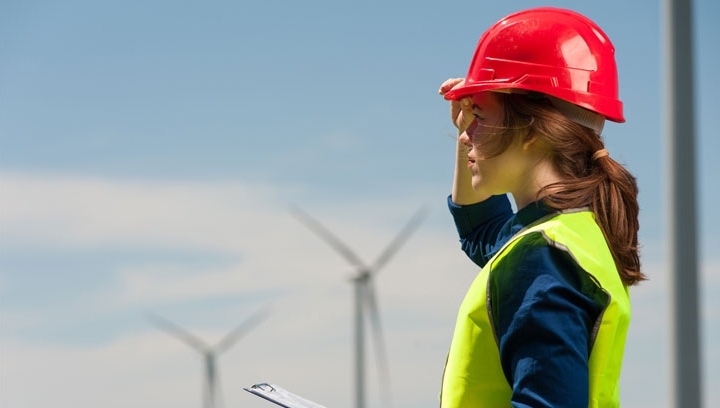
There was "no significant change" in the number of people employed in the UK's green economy, or in the level of turnover generated in low-carbon sectors, between 2015 and 2020, new Government figures have revealed.

The UK's headline goal is to host two million green-collar jobs by 2030

The UK's headline goal is to host two million green-collar jobs by 2030

The Office for National Statistics' (ONS) latest annual survey of the green economy has been published this week, revealing that there were still fewer people working in green sectors in 2020 than there were in 2014.

The survey covers employment in 17 sectors relating to low-carbon and renewable energy, including nuclear power generation, renewable power generation, energy flexibility, energy efficiency and electric vehicles (EVs). 

Across all 17 sectors, the UK hosted some 207,800 full-time equivalent roles in 2020 – a minor increase on the 2019 level of 202,100 full-time equivalent roles. This number of roles is around 1% of the UK’s total non-financial employment for 2020 – the same proportion as in 2019.

The increase was ultimately not enough to push the UK to a new record. The ONS recorded 235,900 full-time equivalent jobs in the green economy in 2014 and this remains the record high. Each edition since 2014 has continued to track challenges in growing sectors including carbon capture, onshore wind, tidal energy and hydropower.

As in previous years, the vast majority of the jobs assessed have been located in the UK (82%) and the manufacturing of products that improve energy efficiency is the largest sector in terms of jobs, accounting for 42% of full-time equivalent roles.

The ONS has called the sector’s slight overall increase in turnover and employment as indicative of “no significant change”.

Nonetheless, there is some good news to be taken from the ONS’s survey. It reveals that large businesses, classed as those with 250 or more staff, recorded just a 6% year-on-year drop in turnover from green activities in 2020.

Recapping on the state of play

The Government’s green jobs target is for the UK to host two million full-time equivalent roles by 2030. Given that the Net-Zero Strategy, published last autumn, only details the creation of a further 440,000 roles by 2030, MPs and industry groups have repeatedly been asking for clearer jobs and skills plans – but are yet to receive the answers they have been hoping for.

To help improve policymaking in this field, the Government moved in 2020 to create a Green Jobs Taskforce featuring representatives from trade bodies, NGOs, the education sectors and several of the UK’s biggest employers in low-carbon and renewable energy sectors, such as Nissan and National Grid.

The Taskforce last year published its first policy briefing. Recommendations yet to be fulfilled include an update to the Skills for Jobs White Paper and the creation of a UK-wide body tasked with connecting local transition bodies to ensure sufficient place-based investment. Some recommendations, such as the inclusion of net-zero measures within international trade frameworks, are being implemented.

Sarah George

Net Zero? Let's Increase Airport Capacity!

 More muddled decision making highlighted in this post from Edie:


'Completely unjustifiable': Environmental groups slam UK Government for approving Bristol Airport expansion

The UK's Planning Inspectorate has given Bristol Airport the green light to complete its expansion plans, despite opposition from local councils and concerns that the move would undermine the UK's net-zero transition.

Pictured: An artist's impression of the Airport's terminal building post-expansion. Image: Todd Architects/ Bristol Airport

Pictured: An artist's impression of the Airport's terminal building post-expansion. Image: Todd Architects/ Bristol Airport

Bristol Airport, as a private company, first unveiled plans for an expansion that would take its annual passenger capacity from ten million to 12 million in 2018. The plans were rejected by North Somerset Council on Environmental Grounds in 2020 and, following that decision, rejections were also confirmed by Bristol City Council, Bath and North East Somerset Council and the West of England Combined Authority.

All of the councils had heard objections from the local community on grounds including increased emissions, increased noise pollution, disruption to local transport routes and the need to funnel investment into low-carbon sectors instead.

Bristol Airport, after failing to win an appeal with North Somerset Council in 2021, filed an appeal to the UK Government’s Planning Inspectorate. It was announced late on Wednesday (2 February) that the Planning Inspectorate had approved the plans.

The Airport itself has touted the plans as important to the local economy. It is forecasting 800 new jobs to be created at the site, plus up to 5,000 across the region, including apprenticeships.

It has also defended the climate credentials of the plans, pointing to its plans for net-zero operational emissions by 2030 and its plans to improve public transport links, thus reducing individual car journeys to and from the terminal.

The Planning Inspectorate’s documents stipulate that any increases in emissions caused by the Airport’s expansion can be offset by greater reductions elsewhere. It is also stated that the organisation is not in a position to stipulate whether the UK will meet its Sixth Carbon Budget at this stage, fiving climate change “neutral weight” in the decision.

Additionally noted in the document is the fact that the Inspectorate does not see limits on passenger capacity as “the way forward”. This is despite limits being supported by the Government’s own climate advisors, the Climate Change Committee (CCC). The UK Government’s Transport Decarbonisation Plan, published last year, sets a 2040 deadline for net-zero domestic flights and airport operations and a 2050 deadline for net-zero international flights. It does not support capping airport expansion.

Bristol Airport Action Network, a local campaign organisation, has confirmed it is considering a challenge in the High Court.

Anger, disappointment and disbelief

Local councils, as well as environmental groups, are far from convinced of the Airport’s green intentions – or on how the decision would comply with the UK’s long-term climate targets.

"We face a climate emergency and to countenance yet more leisure flights from this airport is completely unacceptable from one of the main sources of greenhouse gas emissions,” North Somerset Council Leader Don Davies told the BBC.

"The wider impact on the impacts on the environment outweigh the benefits of airport expansion, which sit almost entirely in the commercial interests of the owners, a foreign pension fund,” Davies added. The Airport is owned by Canada’s largest single-profession pension plan, Ontario Teachers’ Pension Plan.

The New Economics Foundation’s chief executive Miatta Fahnbulleh wrote on Twitter: “Giving the green light to the expansion of Bristol Airport goes against the desires of the local community who want green jobs – not polluting infrastructure – for their area.

“As our evidence to the inquiry showed, the economic benefits of the expansion have [also] been grossly overstated.”

Wera Hobhouse MP, the Liberal Democrat MP for Bath, Tweeted: “What a bleak day for our planet. This is nothing short of climate denial and is completely unjustifiable.

“Short-term thinking and a refusal to face up to the climate emergency will have a catastrophic impact on our planet.”

The Green Party’s only MP, Caroline Lucas, Tweeted: “Unbelievable! Allowing Bristol Airport to more than double its capacity is outrageous and totally incompatible with tackling the climate emergency.

“The Government has ridden roughshod over local democracy and trashed any pretence that they are serious about a green transition.”

Expansion plans are also currently in the pipeline for Leeds and Heathrow airports.Transport Secretary Grant Shapps stated last September that the Government will continue to support a third runway at Heathrow Airport, arguing that it would "not be appropriate" to review airport planning rules over climate concerns.

Sarah George