Wednesday, 16 February 2022

Levelling Up? Not in Net-Zero Space

 This repost from Edie is stark in its content:


75% of Brits don't trust Government and businesses to deliver just transition to net-zero

A survey of more than 8,000 adults in the UK has revealed that just 25% believe that the social benefits of the transition to a more sustainable economy will be shared equally, evidencing a gap between talk and action on the just transition from policy and the private sector.
The survey, commissioned by Business in the Community (BITC) and conducted by YouGov, was carried out last September and the results were released in a new report this week. In total, 8,026 members of the general public and 2,007 decision-makers at businesses were polled.

Among the business decision-makers, 40% were confident that the social benefits of the transition to a net-zero economy and the aversion of the biodiversity crisis will be shared equally. But this proportion falls to 25% among the general public.

When asked about who will bear the brunt of the negative impacts, including costs, only 28% of business leaders were confident that these would be shared fairly. This proportion falls to 14% among the general public. Worryingly, 40% of the general public said they think the negative impact of reaching net-zero would be more harmful than the negative impact of climate change.

BITC has stated that this evidences that “there is much work to be done to demonstrate that a fair and inclusive transition is possible”.

One of the major barriers to the delivery of a strong just transition narrative detailed in the BITC report is public distrust in corporate claims. Almost two-thirds (62%) of the survey respondents said they do not trust businesses to do what they promise on climate.

The report notably comes shortly after the UK’s Competition and Markets Authority (CMA) announced its first sector-wide review of environmental claims, targeted at fashion. Businesses will be assessed on whether their claims meet the Green Claims Code requirements and, if they fall foul, will be subject to punishments including fines.

“Businesses must act to rebuild trust, communicating openly and transparently with employees, customers and communities about what they’re doing, and the risks and opportunities involved,” the report states.  “With trust in business to act on climate dangerously low, it is up to business leaders to show rather than tell how they are acting to address the climate crisis.”

The BITC report also outlines how the general public are not engaged with the realities of the upskilling and reskilling opportunities presented by the net-zero transition – perhaps because businesses and policymakers are not delivering and promoting strong plans.

89% of respondents believe they will be able to continue doing their current job without developing “at least a fair amount” of new skills. Additionally, 76% said they do not properly understand how businesses, in general, are responding to the climate crisis.

Last week, the UK Government shelved several recommendations put forward by MPs to support the UK's ambition to host two million green jobs by 2030 - an aim it is not currently on track to achieve.


join the just transition conversation at edie's Sustainability Leaders Forum 

edie’s biggest event of the year is returning as a live, in-person event for 2022. The dates have been moved from early February to March, to ensure collaboration and celebration can take place in person. 

The Sustainability Leaders Forum will now take place on 8 and 9 March 2022, and will unite hundreds of professionals for inspiring keynotes, dynamic panel discussions, interactive workshops and facilitated networking. There will also be digital tickets.

Taking place at London’s Business Design Centre, the event will feature more than 60 speakers, including experts from Natural England, the Green Finance Institute, the World Economic Forum and the Centre for Climate Repair. We’re planning our most diverse and inspirational programme yet.

Click here for full information and to book your pass.

At 1.30pm on 9 March, we will be hosting a workshop on driving social equality and achieving a just transition. Expert speakers from the World Benchmarking Alliance (WBA), A Blueprint for Better Business, Nesta, The Very Group and Ombudsman Services have been confirmed for this session. 


Sarah George

Aviva Puts Corporates On Notice

 This post from Edie is worth reading in full. Hopefully other investor bodies will follow Aviva - and go further in kicking large corporations into action.


Reposted from Edie:


Aviva Investors to put 1,500 corporates on notice over climate and other ESG issues

Aviva Investors has stated that it will file and support shareholder resolutions relating to environmental, social and governance (ESG) issues - including motions to oust chief executives.

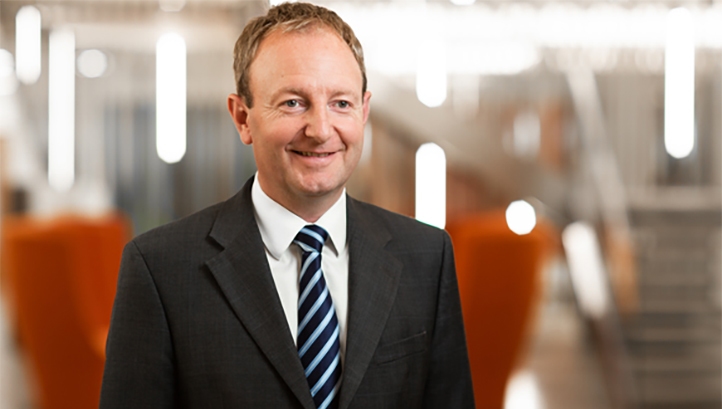
Pictured: Aviva Investors' CEO Mark Versey

Pictured: Aviva Investors' CEO Mark Versey

The firm, which manages more than £262bn of assets, has urged the chairs and executives at all businesses in which it invests to show urgency on issues including the climate crisis, biodiversity loss and human rights.

Specifically, it is calling on the businesses to publish detailed biodiversity, net-zero and human rights-related actions plans, and to link executive pay to the delivery of these plans. Net-zero plans are notably set to become a legal requirement for large, high-emitting businesses in the UK – where Aviva Investors is based – from 2023.

Should businesses fail to take these actions, the letter makes it clear that Aviva Investors can and will vote against them this AGM season. It emphasises how Aviva Investors opposed board members at 85 firms in 2021 over human rights concerns, and a further 137 firms over a lack of diversity on company boards.

Aviva Investors invests in more than 1,500 companies in 30 countries. Each is set to receive a tailored letter detailing this call to action, first made in the firm’s annual letter from chief executive Mark Versey this weekend.

"We acknowledge the magnitude of many of these challenges and will evaluate companies on the strength of their commitments and their ability to demonstrate progress over time…However, we will hold boards and individual directors accountable where the pace of change does not reflect the urgency required," the letter summarises.

“To tackle a systemic risk such as Covid-19, the global response needed to be proportionate, coordinated and immediate. There are clear parallels with what is required to confront the looming climate and biodiversity emergency. Any further delay in collective and individual climate action and efforts to protect rapidly depleting natural resources could prove catastrophic. “

The letter lists five issues that Veresy has stated will “guide” Aviva’s investment decisions and voting at AGMs, namely stakeholder business models; diversity and social inclusion; executive pay; climate change and effective, dynamic leadership. This latter topic looks at how businesses are responding to challenges including new green policy, changing consumer demands and digital technology.

Stakeholder business models, the first topic listed, was also a key focus in the recent annual letter from BlackRock boss Larry Fink. Fink wrote earlier this month that “stakeholder capitalism is not about politics. It is not a social or ideological agenda. It is not ‘woke”.

On climate change, Veresy’s letter sets out clear expectations for businesses.  It urges them to set net-zero goals for 2050 or sooner and to support them with credible science-based targets. It emphasises that climate goals cannot exist in a silo and must be backed by adequate plans for investment and reskilling or upskilling. Also highlighted is the need to measure and disclose climate risk.

Net-Zero Asset Owner Alliance

In related news, the UN-Convened Net-Zero Asset Owner Alliance has published an update to its target-setting protocol, imploring asset owner members to set more ambitious interim targets on the long-term journey to net-zero portfolio emissions.

For most asset managers, portfolio emissions account for 95% or more of the businesses’ overall emissions footprint.

The updated protocol recommends that all asset owners should strive to reduce their absolute emissions by at least 49% by 2030, against a 2020 baseline, aiming for a 65% reduction if possible. The Intergovernmental Panel on Climate Change (IPCC) notably stated in 2018 that, to give humanity the best chance at capping the global temperature increase to 1.5C, emissions globally should be halved by 2030.

Also included in the updated protocol is advice for investors developing sector-specific decarbonisation goals for high-emitting sectors including agriculture, chemicals, concrete and aluminium. Advice was already available for sectors including energy, transport and steel.

The Alliance said the new guidance “reflects the speed at which all parts of the economy need to decarbonise”. The initiative notably covers 69 member firms, collectively managing more than $6.6trn of assets.

The news comes on the same day that McKinsey has released new research on the investment needed to deliver a science-based net-zero transition. A headline finding is that $9trn is needed annually through to 2050, but that a net-ain in jobs and for the economy would be delivered in a well-managed transition.

Last AGM season, edie published a feature exploring how climate-related shareholder resolutions progress. You can read that article in full here.

Sarah George

Wednesday, 2 February 2022

Climate Crisis Could Wipe Out 1% of GDP by 2045

 Read this from Edie:


Climate crisis could wipe out 1% of GDP by 2045, UK Government admits

The UK Government is forecasting that, without better plans to improve climate resilience, billions of pounds will be wiped off of national GDP in the coming decades, with the costs of inaction set to outweigh the cost of action by 2045.

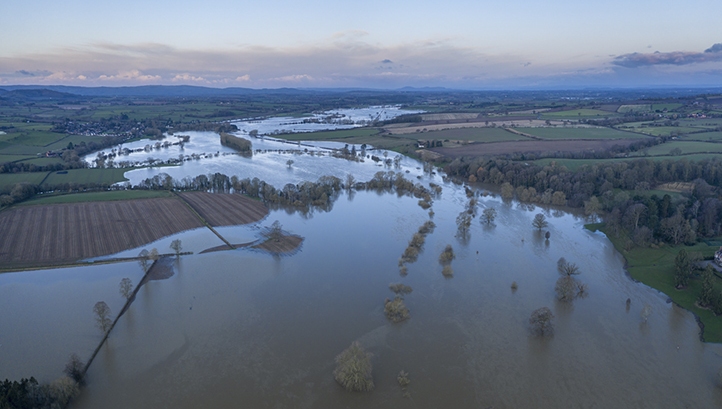
Pictured: Flooding around the River Severn in Shropshire

Pictured: Flooding around the River Severn in Shropshire

The forecast is a headline finding of the UK’s Third Climate Change Risk Assessment, which has been published today (17 January) by the Department for Food, the Environment and Rural Affairs (Defra).

Building on the forecasting and advice on climate risks and resilience published by the Government’s advisors, the Climate Change Committee, last June, the new report assesses dozens of risks the UK could face due to the global temperature increase and related changing weather patterns through to 2050 and 2080. It outlines likely risks in two warming scenarios of 2C and 4C.

For eight of the risks assessed, economic damages will exceed £1bn each year by 2050, even if warming is limited to 2C. A further 36 risks will bear annual When all risks are assessed, the total hit is likely to be at least 1% of GDP in a 2C scenario.

2C is notably the less ambitious pathway detailed in the Paris Agreement. Island States and other most-affected nations and regions have stated for years that it is not ambitious enough, and that 1.5C should be the absolute limit. The agreements made at COP26 are estimated to be aligned with a temperature pathway in the region of 1.8C to 2.4C.

Risks classed as very high in terms of cost include the loss of natural carbon stores; water scarcity; the risk to agricultural productivity; coastal erosion; risks to infrastructure networks and water services; risks to health and wellbeing from high temperatures; risks to buildings and communities from flooding and risks to finance, investment and insurance.

The report also notes that the UK will be exposed to risks from the climate crisis overseas, as a net importer of goods including food, and as home to a major international investment community. Risks affecting international trade routes are forecast to grow more severe with each passing decade and the report also notes risks from potential international, violent conflict due to the climate crisis reaching new highs from 2050 onwards. This would be worse in a 4C world than a 2C world, with risks of wars over resources exacerbated.

The UK has often been accused by green groups of failing to account for emissions generated by its international activities, and the climate risks facing international supply chains and investment portfolios.

According to the new report, some of the UK’s most pressing challenges to effective climate adaptation are a lack of awareness on climate risk; disagreements over who is responsible for responding to risks and “the complexity” of adapting when the future is not certain. It also recognises the need to avoid a piecemeal approach, instead applying solutions across the whole system.

The report has already been presented to senior policymakers at other Government departments, including the Department for Business, Energy and Industrial Strategy (BEIS), the Department for Education (DfE) and the Department for Levelling Up, Housing and Communities (LUHC).

The report commits Defra to laying a new National Adaptation Programme in Parliament in 2023. This report will build on its two predecessors, as well as the UK’s first Climate Adaptation Communication and England’s current £5.2bn flood defence spending plan.

Little has been given away about what the Programme is likely to include at this stage. Climate Adaptation Minister Jo Churchill said Defra recognises the need for a “significant increase” on current levels of action, underpinned by “ambitious and robust policies”.

Green economy reaction

Reacting to today’s report from Defra, the Aldersgate Group’s head of public affairs and communications, Signe Norberg, said: “The report rightly emphasises the need for urgent and coordinated action to both reduce emissions and adapt the UK’s economy and infrastructure to the levels of climate change we are already locked into. In practice, this means that the Government’s work on implementing the Net Zero Strategy, enacting long-term nature improvement targets under the Environment Act, and creating the next National Adaptation Plan all need to be carried out at pace and in a joined-up way.
 
“Investing in a healthier natural environment is key to making the UK more resilient to the impacts of climate change and it will be critical that the Government puts forward ambitious and credible targets under the Environment Act as well as a new and comprehensive Environmental Improvement Plan later this year. The UK must also continue its efforts to deliver rapid emission reductions across the economy and beyond just the power sector. As set out in the Aldersgate Group’s Net Zero Strategy Policy Tracker, key policy gaps remain in crucial areas, such as energy efficiency, agriculture and land use and skills.
 
“The Government is right to want to increase awareness of climate risk at the local level in future assessments but this ambition must be paired with further financial and policy support for local authorities, so they can play a significant role in tackling climate change.”

Research by the Trades Union Congress (TUC) in 2019 revealed that the average council in England was able to spend £7.8bn less annually on key services than it would have been in 2010, primarily due to real-terms cuts in central Government funding. Regarding net-zero specifically, the Government’s approach to providing funding and open-source tools – and to opening communication – has been slammed by the National Audit Office (NAO) and LUHC Committee.

Adding to Norberg’s comments, the Energy and Climate Intelligence Unit’s (ECIU) lead for climate and land programmes Matt Williams said: "The damage caused to the UK by climate change will be greater than the investments needed to avoid harmful levels of warming. This will include impacts on our British countryside, the carbon locked up in trees and peatlands, and on food production with potential rises in food prices. Agriculture and land have been singled out as the weak link in the Government's net-zero plan. It's clear that farmers and the natural world need help not just in cutting emissions, but in adapting to the impacts of climate change too.”

The Net-Zero Strategy provided no new mandates or policy supports for farmers. Defra has begun implementing the new payment schemes promised under the Agriculture Bill, but is behind in publishing a new Land-Use Sector Deal. The CCC estimates that land use accounts for around 12% of the UK's annual emissions.

The CCC has also issued a response to the report. The chair of the organisation's Adaptation Committee Baronness Brown said: “We strongly welcome the Government’s Climate Change Risk Assessment which is based very closely on the CCC’s independent view of UK climate risk.

"But agreeing on the risks is one thing – taking action to address them is another. Building resilience to a cocktail of climate impacts facing our country, including flooding, drought, heat exposure and extreme weather events, is a mammoth task and we’re falling well behind. We look forward to seeing the Government’s action plan to shift the dial and deliver a well-adapted UK.”

The Association for Renewable Energy and Clean Technology's (REA) chief executive Dr Nina Skorupska said: “The report is clear - the size of investment needed to safeguard our future is modest in comparison to the damage caused by the worst climate change scenarios should we fail to reduce emissions. Rapidly accelerating the energy transition isn’t just an environmental imperative, but an economic one too.”

“We need to urgently see a new raft of measures to help accelerate the energy transition, such as the adoption of six-monthly CfD auctions for all pots, bringing forward the 5GW hydrogen production target, and stepping up plans for industrial and non-domestic heat decarbonisation.”

Sarah George

Government Facing Another Court Case by ClientEarth

 It seems that the courts are becoming more and more involved in holding the government to account over failures in its management of environmental issues. Friends of the Earth and ClientEarth are filing papers for a Judicial Review arguing that the government's Net Zero Strategy will fail to deliver legally binding emissions reductions. I think this is quite a hard ask so it will be interesting to see how proceeding pan out.

Major Finance Firms Not Doing Enough To Stop Deforestation

 Edie highlights a report from Global Canopy which indicates that some 2/3 of major finance firms investigated do not have policies aimed at preventing deforestation by the companies in which they invest. I am afraid that this is par for the course as far as finance corporations are, in general, concerned. Money would appear to trump environmental necessity most of the time for most of the players.

400,000 Seawge Discharges in 2020!

 The Environment Audit Committee of MPs has highlighter the exceptionally poor management of discharges and runoff into the country's waterways. A brief overview has been provided by Edie here. The MPs have said that UK waters contain a dangerous chemical cocktail and call for urgent regulatory action.

Tuesday, 1 February 2022

Another Letter to my MP: Partygate is not the Big Issue

 Time for another little missive to my MP:


Dear Ms Richardson,

Congratulations for having the courage to make a stand over "partygate" by resigning your role as a ministerial aide.

The problem for our government in particular, and the country in general, is not, however, the mismanagement of this particular debacle. It is rooted in the amazing state of affairs whereby those that have the power to do so, managed to elect as party leader and ultimately Prime Minister, a man who is so evidently unfit for that role. His reputation has long gone before him. He has twice been sacked for lying. A former employer in print opined that "He would not recognise the truth, whether about his private or political life, if confronted by it in an identity parade". One has to wonder about the judgement of those who voted him into his current exalted position.

I could, of course, go on about the attempted suspension of Parliament to stop scrutiny of his Brexit deal; resurrect the tawdry Patterson affair; rehearse his amazingly casual attitude to sensitive prime ministerial paperwork; cite any number of manifestly false statements; but these should all be well known to you.

I hope that your letter has already been sent to Sir Graham Brady and that you will do your utmost to ensure that the next Prime Minister is installed in office in the very near future and that he or she is a person of integrity and sound judgement.

Yours sincerely