Monday, 26 April 2021

UPS Deliveries by Electric Aircraft

 When I saw the headline about this I immediately thought it was a bit of gimmicky fluff. However, investing in 10 such aircraft is quite an expensive gimmick (even more so if the option to purchase a further 150 is taken up) so perhaps we should take this move seriously. 

Coupled with UPS's apparent commitment to building a fleet of EVs one hopes this might put a bomb up the whole delivery sector. I suspect that in the aftermath of COVID-19 on-line shopping will come to a new plateau at a significantly higher level than pre-pandemic. The emissions pressure this will create cannot be ignored.

Six in Ten Plastic Packaging Companies have no Environmental Policy

 What follows come from a report by Planet Tracker . It provides dismal reading!


Hiding in plain sight between petrochemical companies and consumers (e.g. fast moving consumer goods companies) are the plastic containers and packaging companies, also called “converters” or “plastics producers”. Planet Tracker has identified a Universe of 83 publicly traded global companies i in the Plastic Containers and Packaging (PC&P) sector, which individually have an annual plastic revenue which exceeds USD 100 million and 10% of each company’s total revenue, according to Bloomberg. These 83 companies have a combined market capitalisation of USD 126 billion and account for 93% of the sector’s revenue. In this report we refer to these companies as ‘The Planet Tracker Universe’. 20 companies dominate the PC&P sector globally, accounting for 64% of its USD 53.8 billion revenue, although few have names known to the general public. The companies in the PC&P sector are facing a possible pincer movement as policymakers and consumers are mobilising to push the industry into taking responsibility for the singleuse plastics they produce and sell. In turn, this raises the threat that PC&P investments could become stranded. Companies in the Planet Tracker Universe need a coherent plan to transition to more sustainable processes and products: • 53 companies in our Planet Tracker Universe report no policies on key sustainable packagingrelated topics and few reflect the rising risk of legislation in their company filings. • The top twenty institutional investors in the Planet Tracker Universe have unrealised gains 1 of USD 7.7 billion in 447 investments, led by Vanguard with USD 1.9 billion. Total unrealised gains in the Universe are USD 24 billion held in 8,665 investments surveyed by Planet Tracker. • Less than one-tenth of 1% of the 4,175 institutional investors, with investments in the Universe surveyed, are members of investor initiatives supporting sustainable plastics initiatives. • 70 investors control 60% of public plastics production in the Universe: almost none have pollution policies. • As of 4 January 2021, companies in the Planet Tracker Universe had issued no green bonds, no sustainability bonds and no sustainability-linked loans. • Alarmingly, none of the top 20 individual private equity or foundation investors who each have only one investment in the Planet Tracker Universe for a total of 20 investments valued at USD 10.98 billion, or 12.5% of the 8,655 investments assessed, are participating in, or members of, investor initiatives supporting sustainable plastics initiatives. 70% of the Universe’s corporate bonds and loans are rolling over by 2025, creating an opportunity for some of these PC&P companies to convince investors they should be worthy of issuing green fixed income instruments. Conversely, the largest fixed income investors in this industry, led by BlackRock, J.P. Morgan, Prudential and Robeco, have a clear opportunity to set the investor agenda for these publicly traded companies with regards to how the Universe will coalesce around a vision to support a transition to sustainable practices and a circular economy

Offsetting is just Sloppy Greenwash

 I am becoming rather tired of companies trumpeting their green credentials when all they are doing is offsetting. This is just sloppy greenwash and they need to get real. The latest version of this comes from Etsy. The words are fine but they need to be tackling the hard tasks of reduce, reuse, recycle.

Wednesday, 7 April 2021

Climate Change and Free Markets Don't Mix

 Reposted from Energy in Demand where it had been reposted from the Guardian:


The climate crisis can never be solved by today’s free markets

Dominic Rushe writes on The Guardian website about the views of Tariq Fancy, the former chief investment officer for sustainable investing at BlackRock, the world’s largest asset manager. But for Fancy, who now runs the digital learning non-profit Rumie in Toronto, Canada, BlackRock’s move, and the ones it has inspired, contain a fundamental flaw: the climate crisis can never be solved by today’s free markets.


Green investing ‘is definitely not going to work’, says ex-BlackRock executive

From his desk in midtown Manhattan Tariq Fancy once oversaw the beginning of arguably the biggest, most ambitious, effort ever to turn Wall Street “green”. Now, as environmentally friendly investing grows at an exponential rate, Fancy has come to a stark conclusion: “This is definitely not going to work.”

As the former chief investment officer for sustainable investing at BlackRock, the world’s largest asset manager, Fancy was charged with embedding environmental, social and governance (ESG) corporate policies across the investment giant’s portfolio.

Fancy was a leader in a movement that has given many people, including investors, activists and academics, hope that after years of backing polluters, Wall Street was finally stepping up to confront the climate crisis.

“I have looked inside the machine and I can tell you business does not have this,” Tariq told the Guardian. “Not because these are bad people but because they run for-profit machines that will operate exactly as you would expect them to do,” said Fancy.

Fancy, 42, worked for BlackRock between 2018 and 2019 and was the investor’s chief investment officer for sustainable investing at a time when BlackRock was preparing to announce a major shift in strategy.

“The evidence on climate risk is compelling investors to reassess core assumptions about modern finance,” the BlackRock chairman, Larry Fink, wrote in his highly influential annual letter to CEOs in 2020, shortly after Fancy’s departure. “In the near future – and sooner than most anticipate – there will be a significant reallocation of capital.”

In future, Fink said, BlackRock would transition away from investments in companies that “present a high sustainability-related risk”.

BlackRock manages about $7tn in assets and, with one of Wall Street’s biggest voices sounding the alarm about the need to deal with the climate crisis, the news was viewed as a pivotal moment for the financial community.

But for Fancy, who now runs the digital learning non-profit Rumie in Toronto, Canada, BlackRock’s move, and the ones it has inspired, contain a fundamental flaw: the climate crisis can never be solved by today’s free markets.

“It’s not because they are evil, it’s because the system is built to extract profits,” he said.

Investors have a fiduciary duty to maximise returns to their clients and as long as there is money to be made in activities that contribute to global warming, no amount of rhetoric about the need for sustainable investing will change that, he believes.

“In many cases it’s cheaper and easier to market yourself as green rather than do the long tail work of actually improving your sustainability profile. That’s expensive and if there is no penalty from the government, in the form of a carbon tax or anything else, then this market failure is going to persist,” said Fancy, a former investment banker who now leads an initiative to bring affordable digital education to underserved communities worldwide.

The amount of money that poured into sustainable investment through vehicles like exchange traded funds (ETFs) hit record levels last year. It’s a trend Fancy believes could continue for years and still have zero impact on climate change because “there is no connection between the two things”.

Moving money to green investments doesn’t mean polluters will no longer find backers. The argument is similar to that of divestment, another strategy Fancy says doesn’t work. “If you sell your stock in a company that has a high emissions footprint, it doesn’t matter. The company still exists, the only difference is that you don’t own them. The company is going to keep on going the way they were and there are 20 hedge funds who will buy that stock overnight. The market is the market.

“I don’t think the public realizes we are not talking about stopping climate change,” he said. “We are literally talking about selling assets so we don’t get caught up in the damage when it hits.”

Business knows this, Fancy said, and it also knows the solution – it just doesn’t like it. He compared the business communities reaction to the coronavirus pandemic to its views on climate change. “Science shows us that Covid-19 is a systemic problem for which we all need to bend down a curve, the infections curve.”

As the crisis escalated business leaders were immediately supportive of government-led initiatives to restrict travel, close venues and shutter the economy. “The Business Roundtable [the US’s most powerful business lobby] said we should make mask-wearing mandatory. They were right about all those things,” he said.

The world needed government to use its extraordinary powers “because if you left it to the free market everything would have been open in the US and we would have lost millions of people, it wouldn’t have been half a million”.

Climate change too is a problem science says is systemic and one where we have to bend down the curve. “The difference is the incubation period. It’s not a few weeks, it’s a few decades. For that they are still saying we should rely on the free market. That’s where I have a problem.”

A survey of 250 senior executives supports Fancy’s point. About 64% of the executives surveyed in a recent poll commissioned by British lender Standard Chartered said they “believe the economics of operating as a net-zero [carbon emissions] organization do not stack up for their company”. And 79% of senior executives said short-term CEO tenure made it harder for companies to transition to net zero.

Under the current system the costs, says Fancy, are simply too high and the benefits of conducting business as usual are too great. A 2019 Morgan Stanley study found that getting to net zero by 2050 will cost $50tn.

“The reality is that their incentives are very short-term,” he said. “My concern is that when it comes to climate change, it’s actually expensive. It’s like saying when it comes for Covid-19 that’s a crisis and an opportunity. Well yeah, it’s an opportunity for Zoom, it’s not an opportunity for society.”

There is a solution, said Fancy, and it’s the one that business leaders embraced in the coronavirus crisis: government intervention. But – given the long time line for climate change – it’s one that business leaders don’t like.

What would work is a change in government policy that made it more expensive to pollute, such as a carbon tax, because that would change the corporate world and Wall Street’s incentives.

“If you put a tax on carbon, every single portfolio manager would adjust their portfolio,” he said.

BlackRock disputes Fancy’s analysis. In a statement the company said: “Sustainable investing can deliver strong investment returns while also helping to address urgent social and environmental concerns.”

The company added that it believes greenwashing “is a risk to investors and detrimental to the asset management industry’s credibility, which is why we strongly support regulatory initiatives to set consistent standards and increase transparency for sustainable portfolios”.

But for Fancy the overarching point is that real change has to be led by government, not Wall Street.

“If I was on a panel and someone asked me what’s the best way to tackle climate change? Should I buy an ETF or should I call my congressperson and demand legislation and a price on carbon? The truth is someone is better off calling their congressperson.”

Thursday, 1 April 2021

Batteries Again

 I've mused on the need for hugely increase energy storage before so this report reposted from Edie needs no further introduction:


UK must dramatically scale battery energy storage to meet net-zero, report reveals

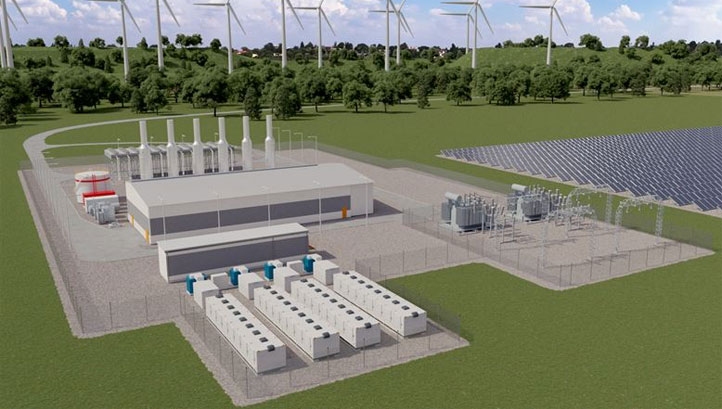
If the UK is to align its energy sector with its net-zero target, domestic capacity for energy storage and other assets that enable flexibility will need to grow to 49.5GW this decade.

Pictured: An artist's impression of co-located renewable electricity generation and flexibility assets. Image: Wärtsilä

Pictured: An artist's impression of co-located renewable electricity generation and flexibility assets. Image: Wärtsilä

That is according to a new analysis from Wärtsilä, published today (31 March).

The analysis explores how the UK can deliver on National Grid’s ambitions regarding carbon-neutral or even carbon-negative electricity, while also aligning the rest of the energy system with its legally binding national net-zero target. It states that flexible energy assets will help to reduce the cost of the transition while alleviative concerns about the intermittency of renewable energy generation.

Wärtsilä models what it claims is an ideal scenario, in which the UK can transition to 100% renewable and lower-carbon energy. This scenario involves the UK hosting 7.3GW of energy storage capacity – predominantly in the form of utility-scale batteries – as well as 42.2GW of flexible gas power capacity.

Flexible gas has proved controversial in the net-zero discussion. While gas can help grid balancing at low costs and with a rapid turnaround, policymakers in geographies including the EU have argued that it will have no place in the long-term.

With this in mind, Wärtsilä argues that all developers of new flexible gas power capacity should ensure that facilities are ready for future fuels including hydrogen blends. Existing facilities could also be retrofitted, the report states.

The report draws on the organisation’s previous ‘Atlas of 100% Renewable Energy’ to conclude that, by adding flexible gas to the mix and scaling energy storage, G20 nations will reduce the costs associated with the low-carbon energy transition this decade by 38%.  

“By building high shares of renewables, we can create the conditions to produce carbon-neutral future Fuels that can decarbonise all energy-intensive sectors, from power to mobility,” Wärtsilä Energy‘s energy business director Pekka Tolonen said.

“To solve this final piece of the net-zero puzzle, the answer once again is to urgently build more renewables, supported by future-proof flexibility solutions.”

Energy Systems Catapult

The Wärtsilä analysis comes on the same day that the Energy Systems Catapult (ESC) is releasing a report detailing policy recommendations for the UK government, regarding electricity market reforms on the road to net-zero.

Entitled ‘Rethinking Electricity Markets’, the ECS paper argues that innovators must be incentivised to develop the low-carbon technologies, products and services needed for National Grid to meet its net-zero ambition. It states that the Government’s current approach is not technology-neutral, which is “stifling” the potential of some flexible and ‘smart’ technologies. For example, it has big commitments to scale up offshore wind, but not the demand-side technologies needed to minimise the cost of this transition.

The report also argues that the Government has not outlined clear targets for the decarbonisation of the electricity grid, or measures to mandate their delivery, beyond the 2050 net-zero target. Many analyses in recent months have stated that Ministers must do more to support long-term climate ambitions with sector-specific measures in the interim.

Policy recommendations detailed in the report are called ‘EMR 2.0’. They include measures to reform the Contracts for Difference auction process, replacing it with a more “outcome-based” system that would better support promising emerging renewable technologies; measures to better support immature technologies in a technology-neutral manner and to embed carbon budget requirements into regulation for the sector.

Ministers are notably in the process of choosing whether to adopt the Climate Change Committee’s (CCC) advice on the Sixth Carbon Budget this year. The proposed carbon budget would see the UK generating 78% less annual emissions in 2035 than it did in 1990. Meeting this target, the CCC claims, will require more policy support for wind generation, energy storage, nuclear and hydrogen.

“The current government-directed approach to energy is like Boris Johnson telling Steve Jobs how to design the iPhone,” ESC’s strategy and performance director Guy Newey said.

“The progress on renewables over the past 10 years has been extraordinary, but if we are to finish the job of decarbonising the power sector – and create new businesses and jobs – we need to unleash the potential of our brilliant digital energy innovators to create a more flexible and greener system.

“History shows that consumers and markets are the key drivers of innovation – and crucially its widespread adoption. Government should step back from micro-managing the electricity mix and empower electricity consumers and markets to drive demand and shape investment for the biggest impact.”

Sarah George

Resource Efficiency - A New Vision

 A new report from the Green Alliance is well worth a read. It very clearly points out, what we all know but seldom act upon, that we consume too much and have obsolescence designed into all too many products. The UN has estimated that the overall level of resource consumption that is sustainable is about 7 tonnes per person per year (I find this a rather daft metric, but let's stay with it for the moment; at least it is one clear number). Calculated on the same basis the average per capita consumption of the UK is 14.7 tonnes. A radical new approach is clearly required. At its heart is the need in all stages of the economic cycle for products to be designed to stay in use for as long as possible and the materials they are made of must be available for economic recycling into replacements or new products. It's a big ask but setting clear goals in a clear timeframe underpinned by a consistent roadmap could get us a long way down that road. 

Deposit Return Scheme - More Delay

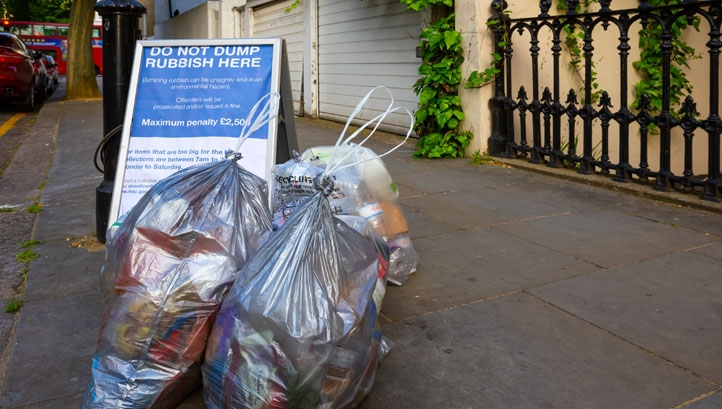
 The Resource and Waste Strategy first saw the light of day back in 2018 yet only now do we embark upon a 10 week consultation period on a deposit return scheme. And the expected start date for such as scheme, if it goes ahead at all, is late 2024. Yes, we are still coping with the COVID pandemic but such heal-dragging is really unforgivable. The reposted article from Edie, below, explains all:


Government launches consultations on Deposit Return Scheme and Extended Producer Responsibility

MPs have today introduced new consultations to create the largest ever overhaul to the waste and resources sector, recommending that manufacturers cover the full costs of recycling packaging waste, standardising domestic and commercial waste collection and introducing a Deposit Return Scheme for certain types of packaging in 2024.

The Government also promised to explore the introduction of consistent recycling collections for households and businesses across England

The Government also promised to explore the introduction of consistent recycling collections for households and businesses across England

The Government has today (25 March) confirmed a 10-week consultation on proposed reforms to how the UK handles and treats its waste and resources through the Environment Bill, which has suffered numerous delays as a result of the coronavirus pandemic.

The new consultation aims to enshrine some of the key mechanisms outlined in the Resources & Strategy, which places stricter requirements on businesses in relation to their packaging. First unveiled back in 2018, the Resources & Waste Strategy set out a long-term blueprint for waste prevention, reuse and recycling in the UK.

The strategy set out plans for manufacturers to pay the full costs of handling their packaging once it was placed onto the market, through the Extended Producer Responsibility system up from 10% at the time. With approximately 11.7 million tonnes of packaging placed onto the UK market in 2019, the Government is also proposing higher levies for materials deemed harder to recycle or reuse.

The Government also promised to explore the introduction of consistent recycling collections for households and businesses across England, which will also be going out to consultation shortly.

Back when the strategy was first unveiled it also promised to consult on the introduction of a Deposit Return Scheme to increase the recycling of single-use drinks containers including bottles and cans. Reports emerged this week that a national rollout of this system – which has boosted recycling rates of those items in some countries to more than 90% - could be pushed back a year to 2024. The Government has not confirmed a timeframe for the system, but the scheme would cover England, Wales and Northern Ireland, with Scotland planning an individual scheme.

The Government confirms that 2024 is the recommended year for the rollout of the initiative.

"We have had to reassess what a realistic timeline for implementation of a deposit return scheme looks like, ensuring that sufficient time is given for a successful rollout of the scheme," the consultation notes.

"We, therefore, anticipate that the introduction of a deposit return scheme in England, Wales and Northern Ireland would be in late 2024 at the earliest. We believe this revision presents a realistic yet equally ambitious timeline to implement a complex but incredibly important policy in the most effective way possible."

Environment Secretary George Eustice said: “Through our world-leading Environment Bill we are transforming the way we deal with waste. Tackling plastic pollution lies at the heart of our efforts, and we have already taken steps to ban microbeads, cut supermarket sales of single-use plastic bags by 95% and prohibit the supply of plastic straws, stirrers and cotton buds.  

“These new changes will further ensure that more of what we consume is recycled and reused. They will stimulate the creation of alternatives to single-use plastics and establish consistent rules to help people recycle more easily across the country.” 

Delays not welcome

The delays to the Deposit Return Scheme – largely driven by the pandemic – are a worrying issue for green groups. UK consumers purchase and discard an estimated 14 billion plastic drinks bottles, nine billion cans and five billion glass bottles annually.

According to Planet Patrol – which recently wrote the foreword for edie’s new single-use plastics report - in 2020, a quarter of all litter recorded on its app by the public were plastic bottles, metal drinks cans and glass bottles, all of which could be collected through the Deposit Return Scheme.

Planet Patrol’s founder, Lizzie Carr, warns that a delay to the scheme could damage national efforts to embrace the circular economy.

“The Deposit Return Scheme offers a real solution to increasing recycling rates and reducing litter levels, highlighted by the high recycling rates of countries such as Germany (as high as 97% recycling rate) who have used a deposit return scheme since 2003,” Carr said. “As Planet Patrol's data shows, implementing a Deposit Return Scheme for bottles and cans alone could lead to eliminating a quarter of all litter in the UK. Expanding the scheme to cover more 'on-the-go' food and drink containers, as identified in Planet Patrol's research, could cut litter by nearly half.”

Friends of the Earth is another group calling for clarity on the implementation of the scheme. The organisation’s plastics campaigner Camilla Zerr said: “A comprehensive deposit return scheme is needed to boost recycling, cut waste and help stem the relentless flow of discarded plastic bottles that blight our environment and threaten our wildlife.

“However, some of these proposals are far too weak. We need an ‘all in’ scheme that includes bottles, cans and cartons of every size and every material. Ministers must stand up to industry lobbying because delaying the scheme until 2024 will create even more unnecessary waste and pollution.”

Friends of the Earth is also calling for legally binding targets to reduce plastic waste to be included in the Environment Bill. 

Waste management firm Biffa also welcomes the introduction of the scheme, but notes the need for it to be readily accessible when it is introduce.

Biffa’s head of environment and external affairs Jeff Rhodes said: “It is critical the Government listens to us and I welcome the consultations launched today. At Biffa we have valuable expertise, we are a leading UK company when it comes to sustainable waste management, surplus produce redistribution and plastic recycling.

“Our expertise can help Government achieve its ambitions of eliminating avoidable waste by 2050, achieving a 65% recycling rate and for all plastic packaging to be recyclable by 2025.”

Another waste management firm, SUEZ, also notes the importance of consumers making informed choices on purchasing packaging that can be easily recycled, a decision that could be made easier if businesses have to front the full cost of their packaging.

SUEZ’s chief executive John Scanlon said: “These keenly awaited consultations will be critical to transforming our approach to the way we make, consume and dispose of products and their packaging, moving us along the road to a more circular economy and our 2050 net-zero ambition.

“The reforms will bring about the biggest change to our sector in well over a decade. Their success is contingent on individuals and organisations from across the value chain coming together to meet the collective challenge of helping government shape the fine detail of its reforms to extended producer responsibility and the design of a complimentary deposit return scheme.

“Investment in new collection systems and treatment facilities alone cannot achieve the step change needed to reduce waste and increase recycling, people also need to be empowered to make sustainable choices at the checkout, whether online or in store, and to be able to recycle easily be that at home, at work or on the go.”

Matt Mace